Best Google AI Overviews Tracker Tools in 2026



Quick Answer: What Is the Best Google AI Overviews Tracker?
The best Google AI Overviews tracker is the one that measures the way you work: by keyword inside a rank tracker, or by buyer prompt next to ChatGPT and other AI engines. No AI Overviews tracker can give you one fixed position, because the answer shifts by query, place and day. Here’s how I’d match them:
- Small budget, one or two brands: Spyro AI Starter ($29 a month, ChatGPT plus Google AI Overviews) or Otterly.ai Lite (29 a month, shown in euros on its pricing cards).
- AI Overview data beside keyword rankings: SE Ranking or Semrush Position Tracking.
- Agencies with many clients: Spyro AI Agency ($399, unlimited brands) or Rankability (from $97, unlimited workspaces).
- Enterprise, or broader AI visibility beyond Google: Profound, Peec AI, AIClicks or Ahrefs Brand Radar.
An AI Overviews tracker records whether Google showed an AI Overview for a search, whether your brand was named or your page was linked inside it, and who appeared instead. Your normal rank tracker can’t tell you most of that. And it matters more than it looks: Pew Research Center found that people clicked a traditional result in 8% of visits when an AI summary appeared, versus 15% when one didn’t.
This guide is for SMBs, in house marketing teams, SEO consultants and agencies choosing an AI Overviews tracker. Tracking is only half the job, though. To improve your odds of being cited, read how to rank in Google AI Overviews. And if ChatGPT matters as much as Google, the ChatGPT rank tracker comparison covers that side.
Prices and plan limits come from each vendor’s official pricing pages and documentation, checked in 2026. They change often, so confirm before you pay.
What Is a Google AI Overviews Tracker?
Start with the feature itself. AI Overviews are the generated summaries at the top of some Google results, with links to the pages behind them. Google’s Search Help says they appear when its systems decide generative AI can be especially helpful. Not on every search.
A Google AI Overviews tracker is software that checks your chosen searches on a schedule and records what those summaries contain. Vendors sell it under a lot of names. You’ll see “AI tracker”, “AI rank checker” and “AI search ranking tool”, and the job is roughly the same. (An AI visibility checker is usually a one off scan, not ongoing tracking.)
What does an AI Overviews tracker record?
- Presence: did an AI Overview appear at all?
- Citations: which URLs did Google link, and was one yours?
- Brand mentions: was your brand named, even without a link?
- Competitors: which rivals showed up instead?
- Change over time and context: how that moved between checks, and the country and device each check ran in.
Keyword based vs prompt based tracking
Here’s the split that matters most when you compare tools.
Keyword based tools are rank trackers that capture the Google results page for keywords you add, in a set location and device. They flag whether an AI Overview appeared and which URLs it cited. SE Ranking and Semrush Position Tracking work this way.
Prompt based tools are AI visibility platforms. You add buyer questions, the tool runs them across several AI engines (Google AI Overviews among them) and logs mentions, citations and competitors. Spyro AI, Otterly.ai, Peec AI, AIClicks, Rankability, Profound and Ahrefs Brand Radar fit here.
Neither is wrong. Keyword based data lines up with your SEO reporting. Prompt based data shows how Google answers the questions buyers actually ask, next to ChatGPT, Gemini and the rest.
Why Should Businesses Track Google AI Overviews?
Because the summary sits above everything else. A few reasons I’d take seriously:
- Brand visibility. If a buyer reads a summary that names three competitors and not you, your organic ranking below it does less work.
- Search traffic changes. Pew also found people clicked a link inside the summary in only 1% of visits. Knowing which keywords trigger a summary helps explain traffic dips.
- Competitor visibility. An AI Overviews tracker shows which domains Google leans on for your topics.
- Citation opportunities. Ranking well doesn’t guarantee a citation. Search Engine Land reported an Authoritas study of 11,203 keywords that found about 40% of AI Overview citations came from pages outside the organic top 10, and 70% of AI Overview rankings changed within two to three months. That data is from 2024 and early 2025, so treat it as directional.
- Search intent changes. When a summary starts appearing for a keyword, the need is often met on the results page. Rethink the page you send people to.
- Performance measurement. Google’s generative AI performance report in Search Console shows impressions in AI Overviews and AI Mode. It doesn’t list clicks or competitors. An AI Overviews tracker fills those gaps.
- Content optimization. The pages Google cites for a topic show you what it found quotable.
How We Evaluated These AI Overviews Tracker Tools
This is a documentation based comparison, not a hands on test. I didn’t run the same keywords through every tool or measure accuracy, so nothing here is a test result. I reviewed each vendor’s pricing page, product pages and help documentation in 2026, then checked every AI Overviews tracker against the same criteria:
- Google AI Overviews coverage: documented directly, or only implied?
- How data is collected: keyword based, prompt based or both.
- Brand mentions, citations and competitor tracking.
- History, reporting and exports.
- Location and device settings, where documented.
- Pricing and value on the plan that actually includes AI Overviews, plus trials and setup.
- Agency and multi brand support.
Where a vendor’s pages didn’t confirm something, I said so instead of guessing. Where its pages disagreed with each other, I flagged that too. Spyro AI was held to the same criteria, gaps included.
Some products were left out on purpose. AI content detectors such as Winston AI check whether text was written by AI, not what Google shows, so they don’t belong here. Tools that only track chatbots were dropped too.
Google AI Overviews Tracker Tools Compared at a Glance
Nine tools, one table. Starting price is the lowest published monthly entry point that includes Google AI Overviews tracking, unless noted. On a phone, swipe sideways.
| Tool | Google AI Overviews support | Brand mentions | Citation tracking | Other AI engines | Starting price | Best for |
|---|---|---|---|---|---|---|
| Spyro AI | Yes, prompt based, on every plan | Yes | Yes | ChatGPT on Starter; adds Claude, Gemini, Perplexity on Pro and Agency | $29/mo | SMBs and agencies wanting tracking plus SEO and content |
| SE Ranking | Yes, keyword based AIO tracker plus prompt based AI Results Tracker | Yes | Yes, with sources grouped by type | AI Mode, Gemini, ChatGPT, Perplexity | $129/mo ($103.20 billed annually) | SEO teams wanting AIO data beside keyword ranks |
| Semrush | Yes, keyword based in Position Tracking | Yes, in Domain Overview | Yes | ChatGPT and AI Mode in the AI Visibility Toolkit | $139/mo (SEO plan); toolkit $99/mo | Teams already on Semrush |
| Ahrefs Brand Radar | Yes, prompt based | Yes | Yes | AI Mode, ChatGPT, Perplexity, Gemini, Copilot; Claude on Custom Prompts | $50/mo (Custom Prompts) | Teams on Ahrefs, market benchmarks |
| Otterly.ai | Yes, one of 7 selectable engines | Yes | Yes | ChatGPT, Perplexity, Copilot, AI Mode, Gemini, Claude | 29/mo (euros on pricing cards) | Low cost daily monitoring |
| Peec AI | Yes, one of 3 chosen models | Yes | Yes | ChatGPT, Perplexity, AI Mode, Gemini and others | $95/mo | Marketing teams focused on sources |
| AIClicks | Yes, selectable model | Yes | Yes | ChatGPT, Gemini, Claude, Perplexity, Copilot, AI Mode | $59/mo | Daily tracking plus articles |
| Rankability | Yes, on every paid plan | Yes | Yes | 10 more, including ChatGPT, AI Mode, Claude, Gemini | $97/mo | Agencies |
| Profound | Yes, on trial and Enterprise | Yes | Yes | Up to 10 engines on Enterprise | Free trial, then custom | Enterprise brands |
Read the second column twice. “Yes” covers two different methods, and a $29 plan with two engines isn’t the same purchase as a $97 plan with eleven. For a fuller look at what plans include, see the AI visibility tools pricing comparison.
Which AI Overviews Tracker Tools Are Worth Shortlisting?
This isn’t a ranking. Each AI Overviews tracker below gets the same format: what it is, how it handles Google AI Overviews, pricing, strengths, limits and who it suits.
1. Spyro AI
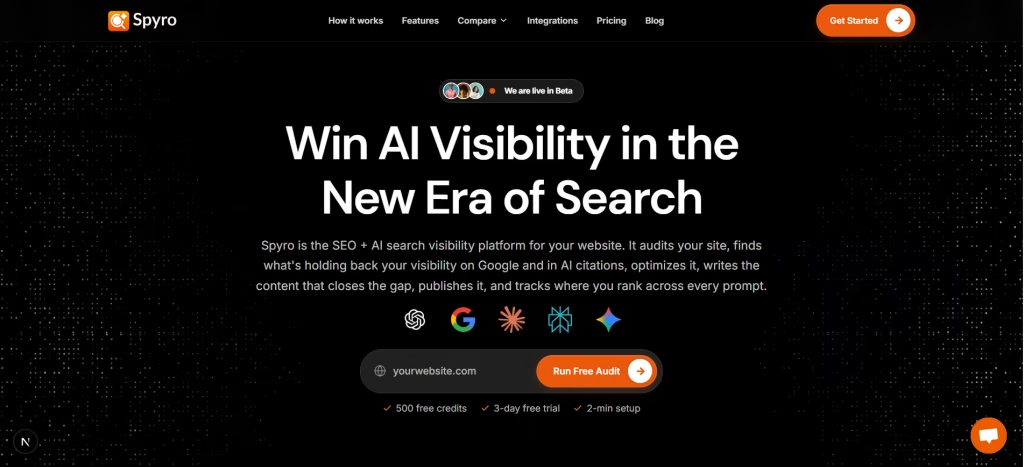
Spyro AI is an SEO and AI search visibility platform. It runs the prompts you choose across ChatGPT, Gemini, Claude, Perplexity and Google AI Overviews and logs every time your brand or URL appears. It also includes keyword rank tracking, a site audit, competitor gap analysis and an AI article writer.
- Google AI Overviews tracking: Prompt based, and included on every plan. Starter covers two engines (ChatGPT and Google AI Overviews), so the cheapest plan already includes Google.
- Other AI engines: Pro and Agency add Claude, Gemini and Perplexity.
- Key features: Mention and citation checks, competitor citation rates (add any competitor domain), share of voice benchmarking, trend charts that build over the first few weeks, and a weekly Monday report.
- Pricing: Starter $29 a month (4,000 credits, up to 2 brands, 15 prompts per brand), Pro $99 (15,000 credits, up to 10 brands, 50 prompts) and Agency $399 (80,000 credits, unlimited brands, 250 prompts). Yearly billing is listed at $288, $990 and $3,990. A 3 day trial includes 500 credits.
- Strengths: One login covers AI Overview tracking, keyword rank tracking and content, so you can spot a citation gap, write the fix and watch the result. Team members are unlimited.
- Limits: Each prompt check costs 10 credits per engine, so one full run of 15 prompts on two engines uses 300 credits. You can set checks to daily or weekly, though the pricing page still says weekly and its FAQ says citation data refreshes every 3 days, so confirm the schedule in your account. The site doesn’t document location settings for AI Overview checks, exports or Google AI Mode tracking.
- Best for: SMBs, marketing teams and agencies that want an AI Overviews tracker plus the tools to act on what it finds.
Verdict: Tied for the lowest entry price here, and Google AI Overviews is guaranteed on that entry plan. Check the credit math if you plan daily runs. Plans are on the Spyro AI pricing page.
2. SE Ranking
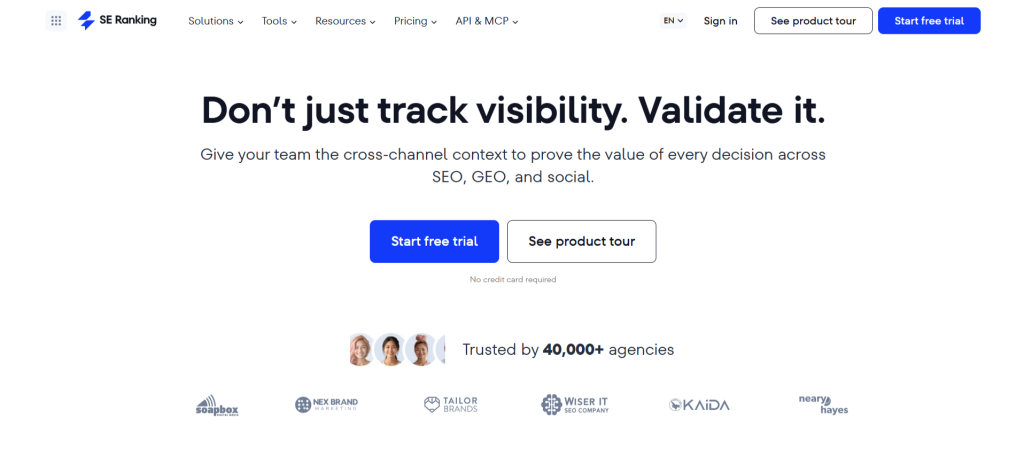
SE Ranking is an SEO platform with two relevant tools: an AI Overviews tracker inside its rank tracking, and a separate AI Results Tracker.
- Google AI Overviews tracking: Keyword based. It shows the share of your keywords that trigger an AI Overview, where your site ranks within it, and which domains and URLs are used as sources, grouped by type (media, blogs, forums). It covers every country where AI Overviews are available and keeps history for target keywords.
- Other AI engines: The AI Results Tracker covers Google AI Overviews, AI Mode, Gemini, ChatGPT and Perplexity, with tabs for rankings, competitors and sources, and it counts how often your brand is mentioned or linked.
- Pricing: Core is $129 a month ($103.20 billed annually) and Growth is $279 ($223.20). Its help center lists the AI Results Tracker on Core, Growth and Enterprise. An SE Visible add on for wider AI visibility starts at $71 a month.
- Strengths: AI Overview data sits next to keyword positions and cached SERPs, so “ranked 4th, not cited” and “ranked 9th, cited” are easy to spot.
- Limits: The feature page doesn’t say which plan includes the keyword based AIO tracker, so confirm before you buy. Core and Growth list 25 AI visibility prompts tracked daily, which is a small set for prompt based work.
- Best for: SEO teams and consultants who think in keywords and want AI Overview data in the same report.
Verdict: One of the more complete keyword based options for Google AI Overviews specifically.
3. Semrush (Position Tracking and AI Visibility Toolkit)
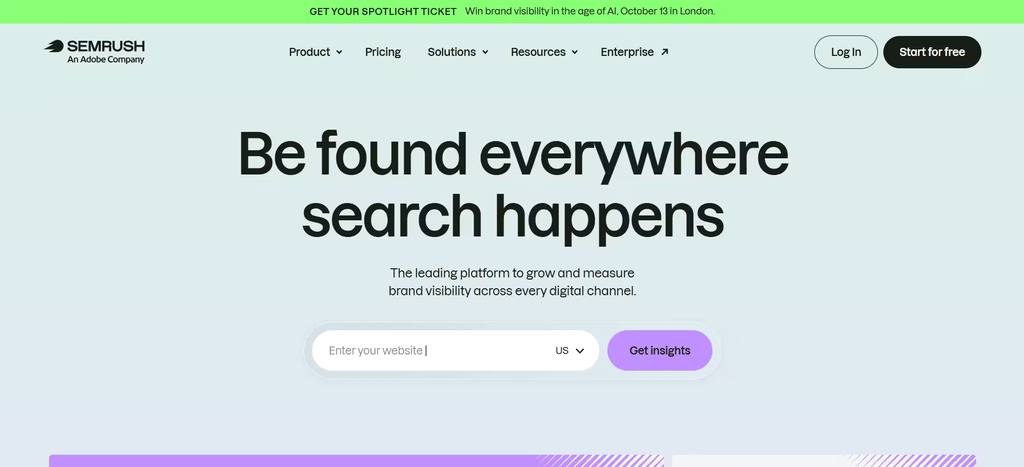
Semrush covers AI Overviews mainly through its traditional SEO tools, with a separate AI add on.
- Google AI Overviews tracking: Keyword based. In Position Tracking, a SERP features filter shows campaign keywords that triggered an AI Overview where your domain is a source. When your domain is cited, Position Tracking records it as a #1 ranking, whatever your organic position. Organic Research and Domain Overview show AI Overview citations, and Domain Overview also shows AI Overview mentions for any domain.
- Other AI engines: The AI Visibility Toolkit help article names ChatGPT and Google AI Mode for prompt tracking. It doesn’t name Google AI Overviews there.
- Pricing: The SEO plan (which lists Position Tracking) is $139 a month, or $117.33 billed annually. The AI Visibility Toolkit is $99 a month for 25 prompts, with no free trial.
- Strengths: AI Overview citations sit inside the keyword, competitor and backlink research you may already use, with location and device settings per campaign.
- Limits: Counting a citation as a #1 ranking blends two signals into your average position, so use the SERP features toggle when you report. The AI toolkit is a separate cost.
- Best for: Teams already running SEO in Semrush.
Verdict: Strong for keyword level AI Overview citations. Less suited to buyer prompts across many AI engines. The Spyro AI vs Semrush comparison goes deeper.
4. Ahrefs Brand Radar
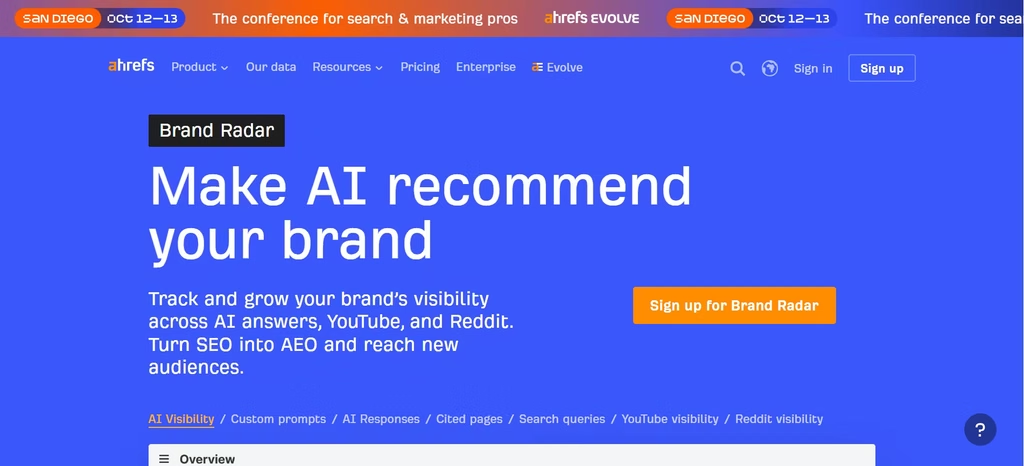
Ahrefs Brand Radar tracks how brands appear in AI answers, with Custom Prompts for your own questions and an AI Visibility Index for market wide benchmarks.
- Google AI Overviews tracking: Prompt based. AI Overviews is covered in both Custom Prompts and the Index.
- Other AI engines: AI Mode, ChatGPT, Perplexity, Gemini and Copilot, with Claude added on Custom Prompts.
- Key features: Mentions, citations, AI share of voice and estimated impressions weighted by search volume.
- Pricing: Custom Prompts start at $50 a month (Lite: 5 prompts, 150 checks, updated daily). The AI Visibility Index is $199 a month.
- Strengths: The Index benchmarks any brand without setting up prompts, handy for competitor research and pitches.
- Limits: Each prompt uses one check per platform per update, so extra engines burn the allowance faster. Countries covered aren’t stated.
- Best for: SEO teams already paying for Ahrefs.
Verdict: Good market data, but budget carefully. See the Spyro AI vs Ahrefs comparison.
5. Otterly.ai
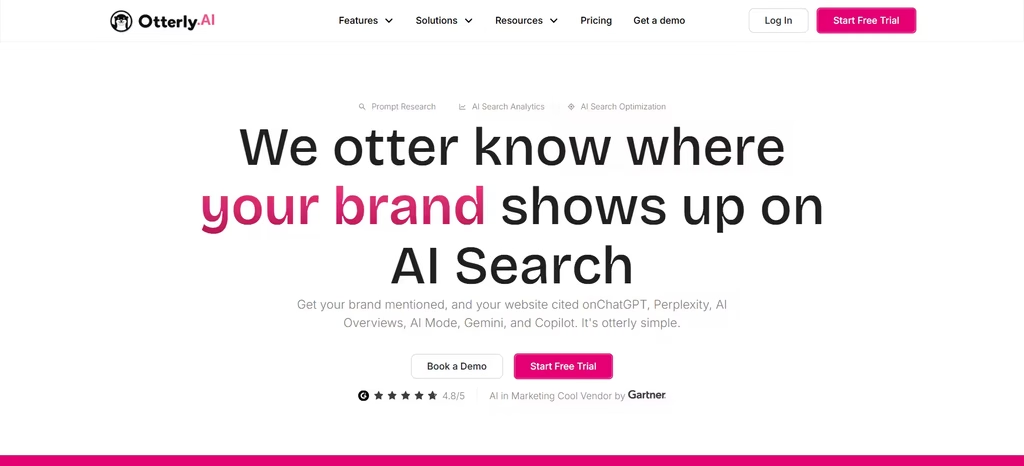
Otterly.ai is a self serve monitoring tool for brand mentions and link citations across AI engines, with Google AI Overviews among them.
- Google AI Overviews tracking: Prompt based. AI Overviews is one of seven engines, and each plan includes four of the seven.
- Other AI engines: ChatGPT, Perplexity, Copilot, Google AI Mode, Gemini and Claude.
- Pricing: Lite 29, Standard 189 and Premium 489 a month, shown in euros on the pricing cards (16, 120 and 403 prompts). The meta description lists dollars and slightly different prompt counts, so check at checkout.
- Strengths: Daily checks, unlimited countries and competitors, plus citation source tracking and exports on every plan.
- Limits: The cards don’t say which four engines each plan includes, so confirm Google AI Overviews is among yours. Lite to Standard is a steep jump.
- Best for: Small teams that want cheap daily monitoring.
Verdict: The low cost daily option, once you’ve confirmed the engine mix. More in the Otterly.ai alternatives guide.
6. Peec AI
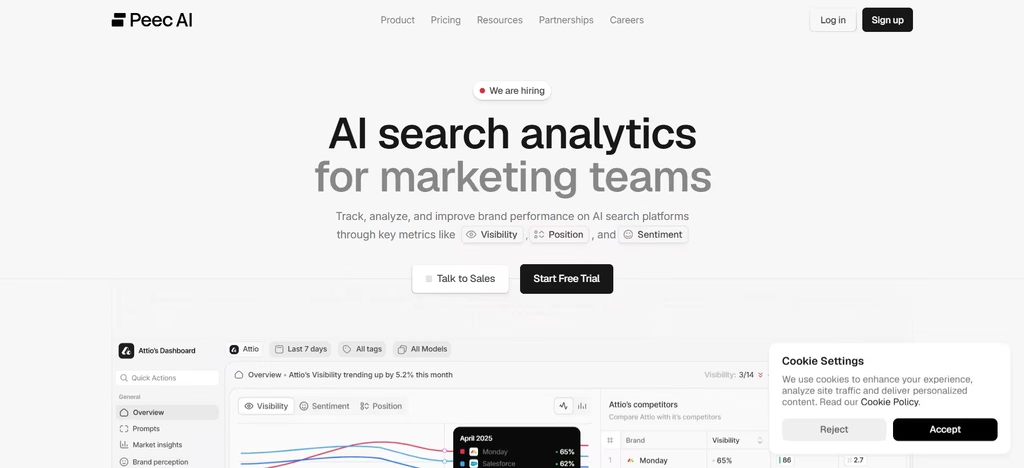
Peec AI is an analytics focused AI visibility platform with daily tracking and strong source reporting.
- Google AI Overviews tracking: Prompt based. AI Overview is one of eight models on self serve plans, and you choose three active models.
- Other AI engines: ChatGPT, Perplexity, AI Mode, Gemini, Naver AI Briefing, ERNIE and Bing AI Mode.
- Pricing: Starter $95 a month (50 prompts, 1 country), Pro $245 and Advanced $495. Extra models cost from $30 a month. Annual billing saves 15%.
- Strengths: Unlimited users, CSV exports on every plan and detailed source analytics.
- Limits: Three models per plan means Google AI Overviews competes with ChatGPT and others for a slot. Starter covers one country.
- Best for: Marketing teams that care about which sources Google and other engines cite.
Verdict: A solid AI Overviews tracker for source analysis, if three models are enough.
7. AIClicks
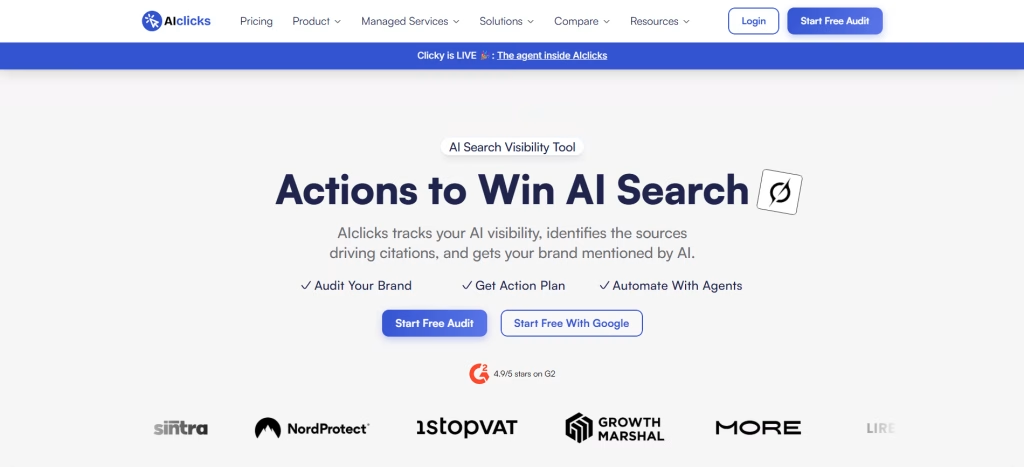
AIClicks combines daily AI visibility tracking with a monthly allowance of AI optimized articles.
- Google AI Overviews tracking: Prompt based. Google AI Overviews is in the model list, and you choose 3, 4 or 6 models by plan.
- Other AI engines: ChatGPT, Gemini, Claude, Perplexity, Copilot and AI Mode, among others.
- Pricing: Starter $59 a month (30 prompts, 1 country, 5 articles), Pro $189 and Business $499. A 3 day trial needs a card.
- Strengths: Daily checks plus drafts from one vendor. GA4, API and MCP integrations start on Pro.
- Limits: Engine choice is capped, and Starter is limited to one website and one country.
- Best for: Teams that want tracking and content help in one subscription.
Verdict: Fine for daily data, but pick Google AI Overviews as one of your models on purpose.
8. Rankability
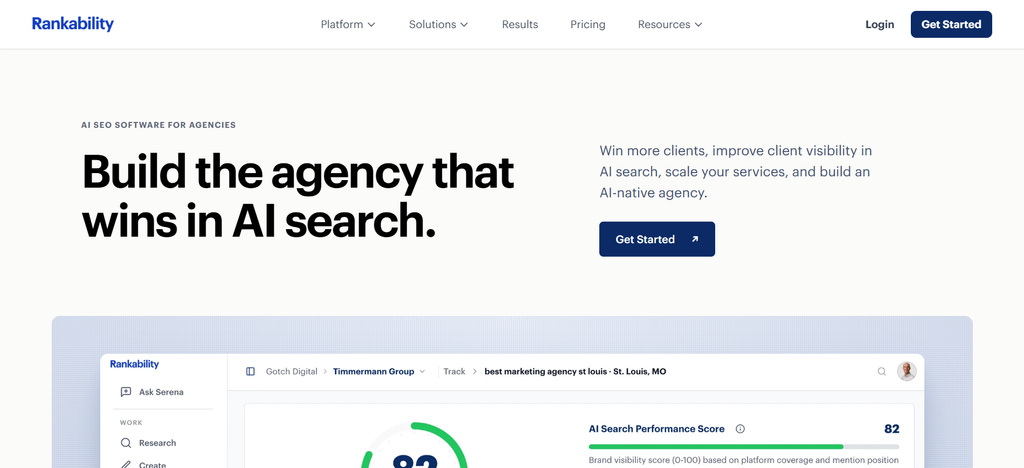
Rankability is AI SEO software with a dedicated AI visibility tracker, aimed largely at agencies.
- Google AI Overviews tracking: Prompt based, and included on every paid plan.
- Other AI engines: ChatGPT, Google AI Mode, Claude, Perplexity, Gemini, Grok, Copilot, Brave AI, DeepSeek and Meta AI.
- Pricing: Starter $97 a month (100 tracked AI queries), Growth $297 (300) and Pro $497 (500). Annual billing equals ten monthly payments. Monthly plans have a 7 day trial with a card.
- Strengths: The same eleven platforms on every tier, daily monitoring, and unlimited workspaces and team members.
- Limits: Allowances are shared across workspaces, so adding clients doesn’t add capacity. The entry price is higher than most trackers.
- Best for: Agencies tracking AI search ranking for many clients.
Verdict: Wide coverage per dollar for multi client work. See the Spyro AI vs Rankability comparison.
9. Profound
Profound is an enterprise AI visibility platform with answer engine insights, citation analytics and agent analytics.
- Google AI Overviews tracking: Prompt based. The free trial covers ChatGPT, Gemini and Google AI Overviews, tracking 50 prompts daily for 7 days.
- Other AI engines: Up to 10 on Enterprise, including Google AI Mode.
- Pricing: Free trial, then custom Enterprise pricing. The older $399 and $499 self serve plans are no longer sold to new customers.
- Strengths: All time history, CSV and JSON exports, API access, SSO and unlimited seats on Enterprise.
- Limits: No public price. The trial uses a recommended prompt set you can’t edit, with no exports or history.
- Best for: Large brands with procurement teams.
Verdict: Built for enterprise. Run the trial before the sales call. The Profound alternatives guide covers other options.
How Do You Choose the Right AI Overviews Tracker?
Answer five questions first: budget, number of brands, keywords or prompts, which engines besides Google matter, and how much history you need. Then match by team type.
Small businesses. One brand, tight budget. Start with Spyro AI Starter or Otterly.ai Lite, plus the free generative AI report in Search Console. A one off AI visibility checker shows whether there’s a problem before you pay.
SEO consultants. You probably report in keywords already. SE Ranking or Semrush Position Tracking puts AI Overview citations next to the rankings your clients know.
Marketing teams. You’ll want buyer prompts, competitors and a few AI engines. Spyro AI Pro, Peec AI and AIClicks fit here. Price the engines you need, because model caps change the real cost.
Agencies. Multiply clients by 20 to 30 prompts each before you compare. Rankability and Spyro AI Agency are built for many brands. The guide to AI visibility tools for agencies goes through reporting in detail.
Enterprise brands. Profound for SSO, exports and history, or Ahrefs Brand Radar if your SEO team lives in Ahrefs.
One more check for everyone: history. An AI Overviews tracker only becomes useful after a few weeks of data, so make sure your plan keeps it.
AI Overviews Tracker vs Traditional Rank Tracker: What’s the Difference?
A traditional rank tracker answers “where does my URL rank for this keyword?” An AI Overviews tracker answers “did Google’s summary name or cite me, and who else?” Those are different measurements.
| Signal | What it means | Traditional rank tracker | AI Overviews tracker |
|---|---|---|---|
| Organic position | Where your URL ranks in the blue links | Yes, its core job | Sometimes, if built on a rank tracker |
| AI Overview appearance | Whether a summary showed for the query | Some flag it as a SERP feature | Yes |
| Brand mention | Your name in the summary text, linked or not | No | Usually, on prompt based tools |
| Citation URL | Which of your pages Google linked as a source | Partly, on tools that add AIO data | Yes |
| Competitor presence | Rival brands and domains in the summary | Only as organic competitors | Yes |
Why can’t a traditional rank tracker cover this on its own? Three reasons. The summary is generated, so the cited sources can differ from the organic top 10. Google says AI Overviews may issue several related searches across subtopics (it calls this query fan out), as described in its guide to AI features and your website. And a brand can be named without any link at all, which position tracking never sees.
Search Console has the same blind spot. Google says AI feature traffic is included in your overall Web search totals, so you can’t separate it in the standard Performance report.
How Do You Track Your Brand in Google AI Overviews?
You can start by hand and automate once you know what matters. Here’s the workflow I’d follow:
- Pick your queries. Mix commercial searches (“best payroll software for small business”) with informational ones your buyers ask. Start with 20 to 30.
- Set your brand and competitor list. Include product names and common misspellings, plus three to five real competitors.
- Check whether AI Overviews appear. Many queries won’t trigger one, which Google itself confirms. Drop or deprioritize those.
- Record mentions and citations. Note whether your brand is named, whether your page is linked and which URL.
- Compare against competitors. Who’s cited when you aren’t? What do their pages do differently?
- Monitor over time. Same queries, same location, same schedule. Weekly is enough for most teams, and it’s where an AI Overviews tracker earns its cost.
- Find content opportunities. Pages that rank but aren’t cited, or topics where a competitor owns every summary, are your shortlist.
- Tie it to outcomes. Compare changes with Search Console impressions, organic traffic and conversions. The guide to tracking AI traffic in GA4 explains why Google AI clicks sit inside Organic Search.
Where does automation help? Steps 3 to 6. Checking 30 queries by hand every week gets old fast, and the AI Overview Google shows you is shaped by your own location. An AI Overviews tracker runs the same checks the same way every time.
Where does manual checking still help? Spot checks. Open a few results yourself each month to confirm your AI Overviews tracker reads the page the way you would, especially for unlinked brand mentions. And when the numbers move, read the actual summary before you react.
Why Is Google AI Overview Not Showing Up?
There are two versions of this question: a searcher who doesn’t see AI Overviews at all, and a site owner whose pages aren’t cited. Here are the usual reasons for both.
If you don’t see AI Overviews when you search:
- The query doesn’t trigger one. Google’s developer documentation says AI Overviews are only shown when its systems decide they add to classic Search, so they often don’t appear.
- Your country or language isn’t covered. Google’s help page lists the countries, territories and languages where AI Overviews are available.
- You’re using the Web filter. That filter shows text links without features like AI Overviews. Some browsers or bookmarks open it by default.
- Something on your end hides it. Browser extensions, query tricks like adding “-ai”, or a custom search setting can remove the summary.
- Google is testing. Its help page notes that settings descriptions are being updated and may not match what you see.
If your site isn’t showing up inside AI Overviews:
- The page isn’t eligible. Google says a page must be indexed and eligible to show with a snippet. There are no extra requirements beyond that.
- Snippet controls block it. Rules like
nosnippetormax-snippetlimit what Google can show from your page. - The site opted out. A Search Console setting can exclude a site from AI Overviews and AI Mode.
- Another source simply answers better. That isn’t a penalty. Citations shift often, so one missing check proves little.
I wouldn’t assume a penalty without evidence. Watch the query in an AI Overviews tracker for a few weeks first. The guide to ranking in Google AI Overviews covers what you can actually control.
Can You Turn Google AI Overviews On or Off?
Short answer: not with a single switch. Google’s help page on AI Overviews calls them a core Search feature and says features can’t be turned off.
Here’s what searchers can actually control:
- To turn off AI Overviews in Google for a search, select the Web filter after searching. Google says it shows only text based links without features like AI Overviews.
- Search Labs is separate. The “AI in Search” toggle in Labs controls experimental features. Switching it off doesn’t remove the core AI Overviews.
- To turn on AI Overviews in Google, there’s no setting to flip. They appear for all users in the listed countries and languages when Google decides a summary helps. If you never see them, check your country, language, the Web filter and any extensions.
That’s the difference between disabling a feature and changing how you search. You can change your search view. You can’t disable the feature itself.
Site owners have a different control. Google’s Search generative AI control in Search Console can exclude a site from AI Overviews, AI Mode and generative features in Discover. Google says it isn’t a ranking signal for the rest of Search, but you’d also lose any traffic and impressions from those features. Most businesses won’t want that.
Key Takeaways
- An AI Overviews tracker records whether Google showed a summary, whether your brand was named or linked, and which competitors appeared instead.
- Keyword based tools (SE Ranking, Semrush Position Tracking) fit SEO reporting. Prompt based tools (Spyro AI, Otterly.ai, Peec AI, AIClicks, Rankability, Profound, Ahrefs Brand Radar) fit buyer questions across AI engines.
- No AI Overviews tracker can give a fixed position. Treat trends over weeks as the signal, not one check.
- Confirm that Google AI Overviews is actually included on the plan you’d buy, because several tools make you choose a limited set of engines.
- Google AI Overviews can’t be switched off by searchers, only filtered with the Web view, and site owners can opt out in Search Console.
Frequently Asked Questions
What is the best Google AI Overviews tracker?
It depends on how you report. SE Ranking and Semrush Position Tracking suit keyword based SEO reporting. Spyro AI and Otterly.ai are the lowest priced prompt based options, Rankability and Spyro AI Agency suit agencies, and Profound suits enterprise teams. Confirm Google AI Overviews is included on your plan.
Can you track brand mentions in Google AI Overviews?
Yes. Prompt based tools such as Spyro AI, Otterly.ai, Peec AI, Ahrefs Brand Radar and Rankability record whether your brand is named in the summary, linked or not. Most also show which competitors were mentioned, so you can track competitors in Google AI Overviews at the same time.
How does an AI Overviews tracker work?
It runs your keywords or prompts on a schedule, captures the Google AI Overview when one appears, and records presence, cited URLs, brand mentions and competitors. Keyword based tools capture the results page for a set location and device. Prompt based tools send buyer questions across several AI engines.
Are AI Overviews trackers accurate?
They’re accurate about what they captured, but each check is a sample. AI Overviews change by query, location, device and time, and citations shift often. Read trends across many checks and spot check results yourself rather than trusting a single data point.
Is an AI Overviews tracker the same as a Google rank tracker?
No. A rank tracker reports where your URL ranks in organic results. An AI Overviews tracker reports whether a summary appeared and whether it named or cited you. Some rank trackers, like SE Ranking and Semrush, now add AI Overview data.
Why is my Google AI Overview not showing up?
Google only shows AI Overviews when it decides they add value, so many queries never trigger one. Your country or language may not be covered, or the Web filter or an extension may be hiding it. For site owners, pages must be indexed and snippet eligible to be cited.
Can I turn off AI Overviews in Google?
Not completely. Google calls AI Overviews a core Search feature that can’t be turned off. You can select the Web filter after searching to see links without them. Turning off the Labs toggle only affects experimental features.
Do Google AI Overviews affect organic traffic?
They can. Pew Research Center found people clicked a traditional result in 8% of visits with an AI summary, against 15% without one. Track which of your keywords trigger summaries and compare against your Search Console and analytics data.
Final Verdict: Pick the AI Overviews Tracker That Matches How You Report
There’s no single winner. If you report in keywords, start with SE Ranking or Semrush Position Tracking. If you care about buyer questions across Google and AI assistants, shortlist two prompt based tools and run the same 20 prompts in both trials for a week. Then compare what each AI Overviews tracker actually recorded.
Spyro AI is a fit when you want Google AI Overviews and ChatGPT tracked from $29 a month, with SEO and content tools in the same account. For a free baseline first, the AI Visibility Checker runs 5 prompts on ChatGPT and Google AI Overviews and shows mentions, citations and competitor gaps, no card needed. When you’re ready to track over time, compare plans on the Spyro AI pricing page.