


Best AI Visibility Tools for Agencies: Multi Client Tracking and Reporting


Quick Answer: Which AI Visibility Tools for Agencies Are Worth a Look?
The best AI visibility tools for agencies track many client brands on the AI engines those clients care about, then turn the results into reports you can explain. No single tool wins on every count. Here’s how I’d match them:
- Unlimited brands on a published plan: Spyro AI Agency ($399 a month) and Rankability (unlimited client workspaces, from $97 a month).
- Branded or white label reports: Rankability lists branded PDF reports, Peec AI’s agency page promises white label reporting, and Otterly.ai’s partner program adds branded Looker Studio reports.
- Already paying for an SEO suite: the Semrush AI Visibility Toolkit or Ahrefs Brand Radar, though both get pricey per client.
- Enterprise clients with procurement checklists: Profound, which lists SSO, SOC 2 and API access on Enterprise.
A visibility score on its own isn’t enough for agency work. You need repeatable AI visibility tracking across client brands, a stable prompt set per client, competitor and citation data, history you can chart and reports a client will read. The right pick depends on client volume, required engines, budget and how much work you want in one login.
Why now? Bain & Company found that about 80% of consumers rely on zero click results in at least 40% of their searches, cutting organic web traffic by an estimated 15% to 25% (Bain & Company). And Google’s AI Overviews passed 2 billion monthly users, per Alphabet’s Q2 2025 earnings call. Clients will ask where they show up in AI answers. You’ll want a real answer.
This guide is for agency owners, account managers, SEO specialists and marketing directors comparing AI visibility tools for agencies with more than a couple of clients. Tracking one brand? The ChatGPT rank tracker comparison is a better start.
Prices and plan limits come from each vendor’s public pricing pages and documentation, checked in 2026. They change often, so confirm before you pay.
What Makes AI Visibility Tools for Agencies Different From Single Brand Tools?
A single brand tool answers one question: is my brand showing up? Agencies ask that for 10, 20 or 50 brands at once, and they need the answers kept apart.
Must have features in AI visibility tools for agencies
- Multiple brands or client workspaces, each with its own prompts and competitors.
- Separated data and access, so a freelancer on one account can’t see another client.
- Consistent prompt tracking. Same questions, same way, every cycle.
- Brand mention tracking and citations. Did the answer name the client, and which URLs did it use?
- Competitor visibility and share of voice. Clients care how they compare with rivals.
- History and trends. A month is a snapshot. Six months is a story.
- Exports, so data can feed your own client reporting dashboards.
- Predictable pricing. You should know what client number 21 costs before you sign them.
Nice to have features (often enterprise tier)
- White label reporting with your logo and colors.
- Granular roles and permissions.
- API, MCP or Looker Studio connections for automated agency AI reporting.
- SSO, SOC 2 and custom data retention for clients with security teams.
Here’s the thing. A single brand tool can work for three clients. It usually breaks around client eight, when per brand fees, project caps or seat costs start stacking up.
How Should You Evaluate the Best AI Visibility Tools for Agencies?
Before comparing AI visibility tools for agencies, write your requirements down. This is the checklist I’d use.
| Criterion | What to ask | Why it matters |
|---|---|---|
| Client or brand capacity | How many brands or workspaces are included? | Caps force upgrades |
| Prompt limits | Per brand or shared across the account? | Shared pools drain as clients grow |
| AI engine coverage | Which engines are on this plan, and which cost extra? | Client audiences use different assistants |
| Tracking frequency | Daily, weekly or custom? | Weekly suits monthly reports |
| Reporting and exports | CSV, PDF, links, Looker Studio? | Your account managers build reports from this |
| White label options | Can reports carry your branding? | Matters if clients see reports directly |
| Historical data | How long is history kept? | Trends are the point |
| Collaboration and permissions | Seats and per client access? | Freelancers need boundaries |
| Integrations | API, MCP, GA4, Search Console? | Automation saves hours |
| Total cost at your scale | Price at 10, 20 and 40 clients? | Entry prices hide the real bill |
A cheap plan gets expensive fast. A $99 tool priced per domain is fine for one client and a different budget line for 20. Per seat fees, engine add ons and prompt packs do the same. Price every plan at the client count you expect next year.
How Do the Best AI Visibility Tools for Agencies Compare?
Eight AI visibility tools for agencies, one table. Prices are the lowest published monthly price unless noted. On a phone, swipe sideways.
| Tool | Starting price | Client capacity | AI engines | Agency advantage | Main limitation | Best suited for |
|---|---|---|---|---|---|---|
| Spyro AI | $29/mo; Agency $399/mo | Unlimited brands on Agency | ChatGPT, Gemini, Claude, Perplexity, Google AI Overviews (Pro and Agency) | Tracking, SEO tools and a writer in one credit pool | Shared credit pool; exports and white label not documented | Tracking plus content work |
| Rankability | $97/mo | Unlimited client workspaces | 11 platforms on all plans | Agency branded PDF reports, API and MCP | Allowances shared across clients | Branded client reports |
| Peec AI | Not publicly listed | Credit based agency plans | 3 models per brand plan; 6 to 7 on agency tiers | White label promised on agency page | No public price; Claude not on lower agency tiers | Citation and source analytics |
| Profound | Free 7 day trial, then custom | Per client workspace (Agency Growth) | Up to 9 on Enterprise | SSO, SOC 2, API, all time history | No public price | Enterprise clients |
| Otterly.ai | $29/mo | Unlimited workspaces from Standard | 4 included; Claude, Gemini, AI Mode extra | Partner program with branded Looker Studio reports | $29 to $189 jump | Small agencies |
| AIClicks | $59/mo | Unlimited websites from Pro | 3, 4 or 6 models by plan | Prompts split across clients, plus articles | Agency pricing custom; no white label listed | Tracking plus articles |
| Semrush AI Visibility Toolkit | $99/mo per domain | 1 domain; $99 per extra | ChatGPT and Google AI Mode named | Inside a familiar SEO suite | $99 per extra user and domain | Semrush based agencies |
| Ahrefs Brand Radar | From €47/mo (euro pricing shown) | Not stated | 6 platforms, plus Claude on Custom Prompts | Market wide AI Visibility Index | Check based billing; no agency features described | Ahrefs based agencies |
The capacity column deserves the longest look. “Unlimited workspaces” doesn’t mean unlimited tracking. Nearly all of these AI visibility tools for agencies still cap prompts, credits or checks across the account.
Which AI Visibility Tools for Agencies Belong on Your Shortlist?
This isn’t a ranking. Each review uses the same format, and I’ve said plainly where a tool falls short.
1. Spyro AI
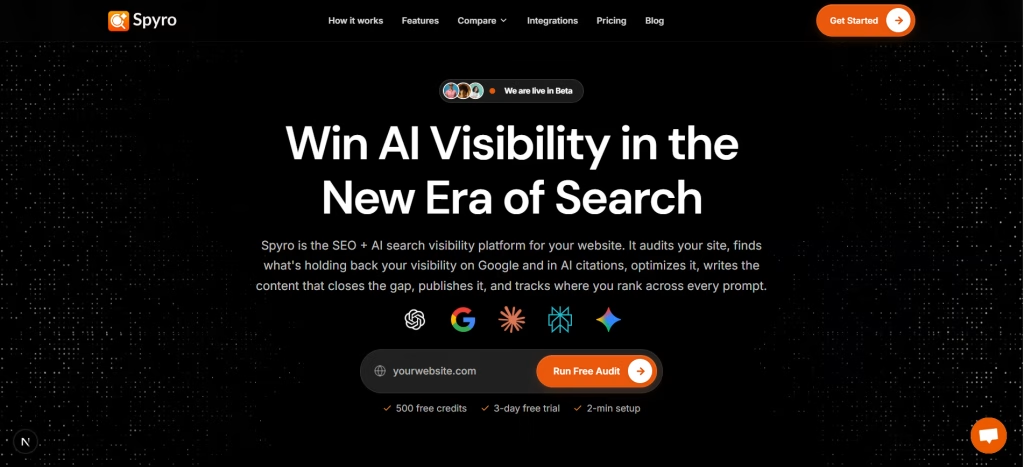
Overview. Spyro AI is an SEO and AI search visibility platform. It tracks whether ChatGPT, Gemini, Claude, Perplexity and Google AI Overviews mention a brand, and adds keyword rank tracking, site audits, competitor research and an AI writer that publishes to WordPress, Shopify, Notion or webhooks.
Agency features. The Agency plan is built “for agencies handling SEO and AI search visibility across multiple client brands.” Each client website gets its own workspace. Team members are unlimited, teammates get set permissions and only owners and admins change billing.
Supported engines. All five on Pro and Agency. Starter covers ChatGPT and Google AI Overviews. No Copilot, Google AI Mode or Grok.
Pricing and plan restrictions. Starter is $29 a month, Pro $99 and Agency $399, with a 3 day trial and 500 credits. Agency includes 80,000 credits a month shared by every brand and up to 250 prompts per brand. The pricing page shows a 20% yearly saving while the billing docs list Agency at $3,990 a year, so confirm at checkout. There’s no self serve credit top up.
Reporting and multi client capabilities. Each workspace shows mentions per engine with a trend, share of voice over time and a competitor table ranked by mentions. Prompt checks run daily or weekly, your choice. Citation checks show where a site is used as a source.
Strengths. Unlimited brands at a published price, with tracking, rankings, audits and content in one account.
Limitations. One shared credit pool. The pricing page lists 10 credits per prompt per engine, but the billing docs describe mention scans differently, so ask how tracking is metered before planning 30 clients. Extra workspaces cost credits (the first is free). Exports, white label reporting and API access aren’t documented.
Best fit. Among AI visibility tools for agencies, Spyro AI suits small and growing agencies that sell both the report and the fix. See the Spyro AI pricing page. Recommending tools to clients too? The Spyro AI affiliate program pays recurring commission.
2. Rankability
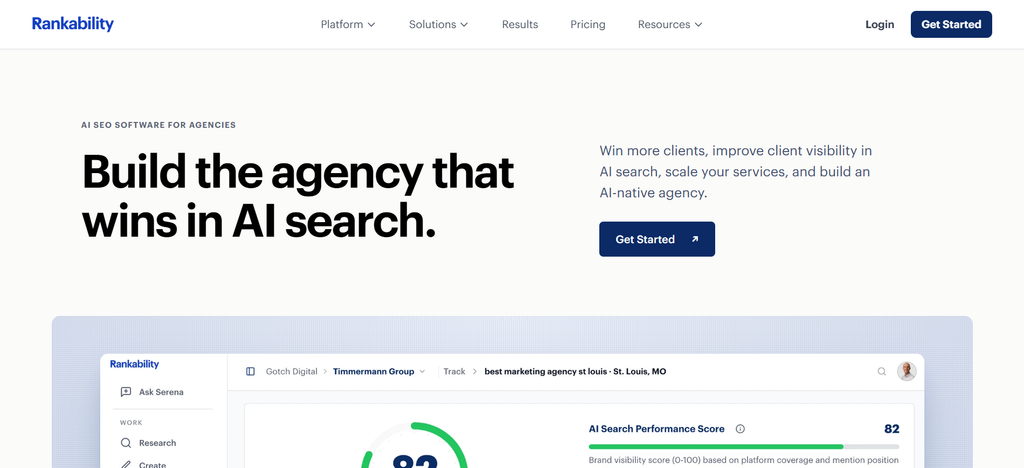
Overview. Rankability is AI SEO software aimed at agencies, combining content projects, audits and AI tracking.
Agency features. Unlimited client workspaces and team members on every plan. Agency branded reports carry your logo and colors, pull in Search Console and Analytics data and export to PDF or a shareable link.
Supported engines. 11 on every plan, including ChatGPT, Google AI Mode, Google AI Overviews, Claude, Perplexity, Gemini and Copilot.
Pricing and plan restrictions. Starter $97 a month, Agency $297, Agency Pro $497. Annual is $970, $2,970 and $4,970. No trial is mentioned.
Reporting and multi client capabilities. 100, 300 or 500 tracked AI queries, checked daily. Exports, API and MCP on all plans.
Strengths. Branded client reports and API access on every plan at a published price. That’s rare.
Limitations. Queries and audits are shared across clients, so 300 queries over 15 clients is 20 each.
Best fit. Of the AI visibility tools for agencies here, Rankability fits teams that put reports straight in front of clients. See the Spyro AI vs Rankability comparison.
3. Peec AI
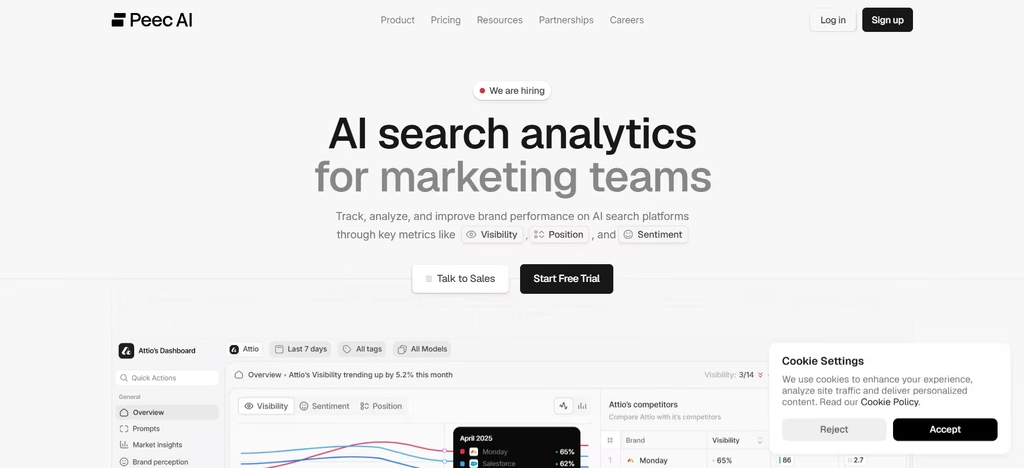
Overview. Peec AI is an analytics focused AI search platform with separate brand and agency pricing.
Agency features. Agency tiers run on 10,000, 25,000 or 65,000 credits a month (one prompt, one model, one day equals one credit), shared across projects with a 900 credit minimum each. Growth is pitched at 3 to 10 clients and Scale at 11 to 25 or more. Free pitch projects let you audit prospects.
Supported engines. Brand plans pick 3 models. Agency Essential and Growth list ChatGPT, AI Mode, AI Overviews, Copilot, Gemini and Naver AI. Scale adds Perplexity.
Pricing and plan restrictions. Neither pricing page showed amounts when I checked. Annual billing saves about 15%.
Reporting and multi client capabilities. Daily tracking, CSV exports and Data Studio dashboards. White label is promised in the agency headline, but tier inclusion wasn’t clear.
Strengths. Source analytics, unlimited users and a clear credit model for splitting prompts across clients.
Limitations. No public price, and no Claude on the lower agency tiers.
Best fit. Agencies whose clients care most about cited sources. The Spyro AI vs Peec AI breakdown compares them.
4. Profound
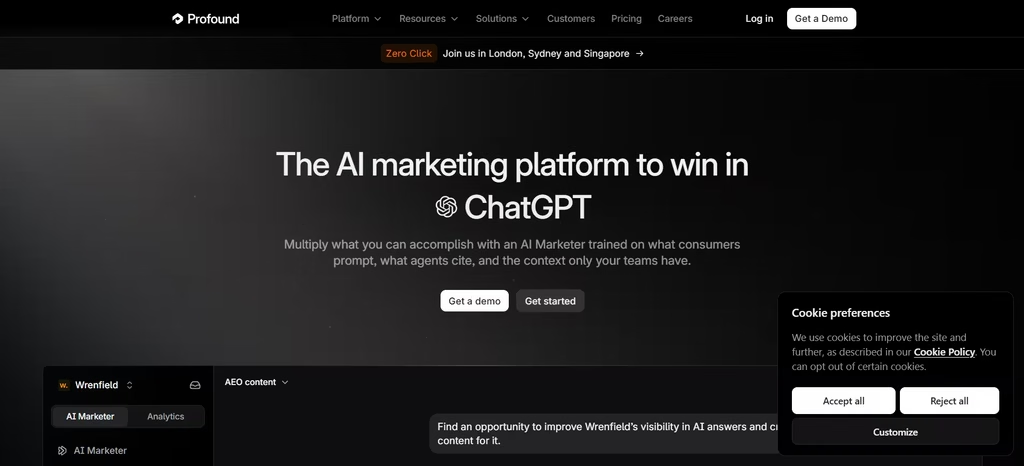
Overview. Profound is the enterprise option in this group.
Agency features. A self serve Agency Growth plan includes 400 credits a month per client workspace. Enterprise adds SSO/SAML, SOC 2 and dedicated support.
Supported engines. The trial covers ChatGPT, Gemini and AI Overviews. Enterprise covers up to 9, including Perplexity, AI Mode, Copilot, DeepSeek and Claude.
Pricing and plan restrictions. A free 7 day trial with 50 daily prompts, then custom pricing. Agency Growth has no published dollar price.
Reporting and multi client capabilities. Enterprise lists CSV and JSON exports, API and all time history. The trial has none of these.
Strengths. Compliance features large clients demand.
Limitations. Sales process, no public price, no white label listed.
Best fit. Among AI visibility tools for agencies, Profound suits teams serving enterprise brands. See the Spyro AI vs Profound comparison.
5. Otterly.ai
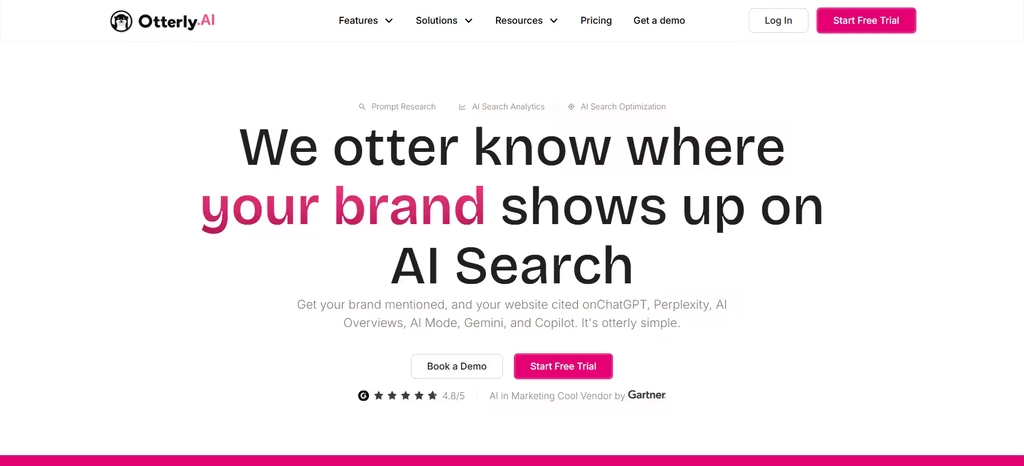
Overview. Otterly.ai is a self serve monitoring tool built on daily checks and link citation analysis.
Agency features. One workspace on Lite, unlimited from Standard, with unlimited team members. A partner program (Standard or Premium plus an application) adds prompts, pitch workspaces, branded Looker Studio reports and one invoice.
Supported engines. ChatGPT, AI Overviews, Perplexity and Copilot. Claude ($29 to $439 a month) and AI Mode and Gemini ($9 to $149 each) are add ons.
Pricing and plan restrictions. Lite $29, Standard $189, Premium $489 a month, with $25, $160 and $422 shown beside an annual “15% off” toggle. Extra prompts are $99 per 100, not on Lite.
Reporting and multi client capabilities. 15, 100 or 400 prompts tracked daily, with reports and exports on every plan. Looker Studio, API and MCP start on Standard.
Strengths. Daily data on four engines at a low entry price.
Limitations. Lite is one workspace, and engine add ons raise the bill.
Best fit. Among low cost AI visibility tools for agencies, Otterly.ai suits small teams testing AI search monitoring for a few clients.
6. AIClicks
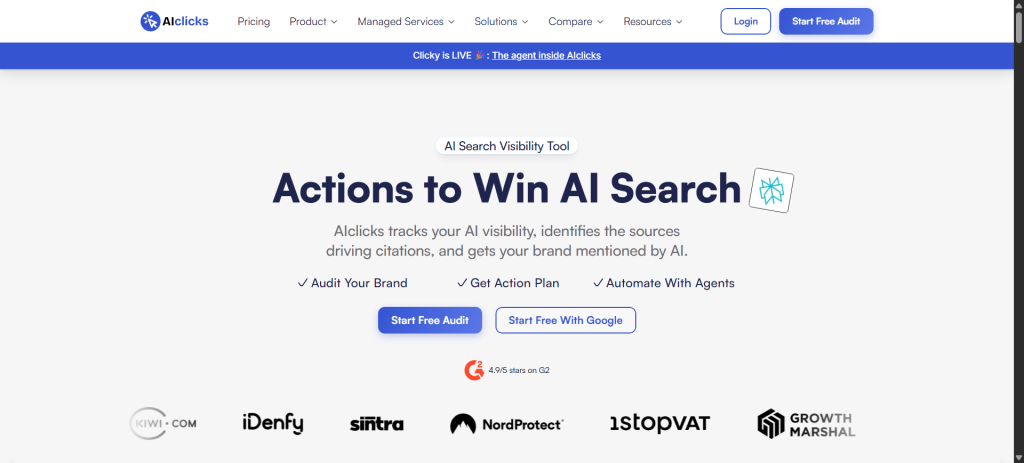
Overview. AIClicks pairs daily AI tracking with a monthly allowance of AI written articles.
Agency features. Unlimited websites from Pro, and prompts split across projects (Pro’s 150 could be three clients at 50). Agency pricing is custom, based on client volume.
Supported engines. 11 listed. You get 3 on Starter, 4 on Pro and 6 on Business.
Pricing and plan restrictions. Starter $59, Pro $189, Business $499 a month. Yearly is up to 29% off. 3 day trial on Starter and Pro.
Reporting and multi client capabilities. 30, 150 or 300 prompts tracked daily. GA4, API and MCP from Pro.
Strengths. Flexible prompt splitting plus content output.
Limitations. No white label listed, and engines are capped by plan.
Best fit. Agencies wanting tracking and content for a handful of clients.
7. Semrush AI Visibility Toolkit
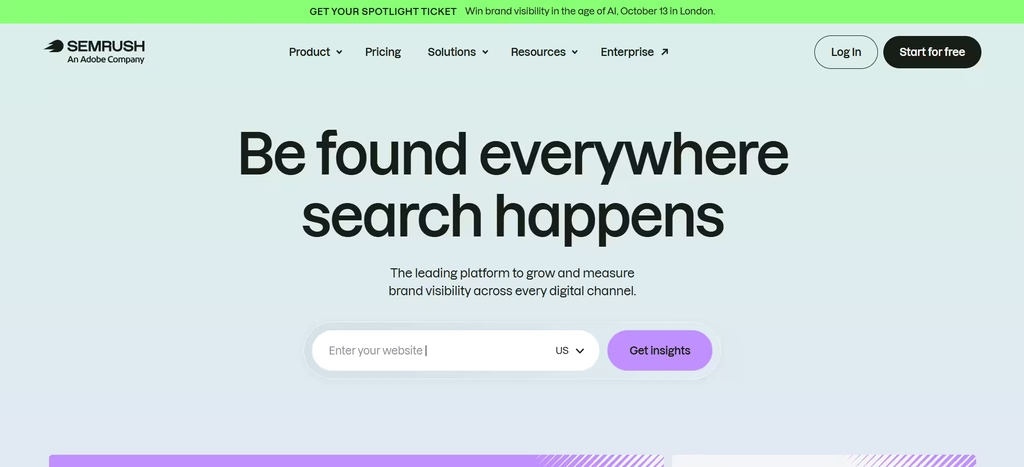
Overview. The toolkit adds AI search reports to the Semrush SEO suite.
Agency features. Brand Performance campaigns are shared with eligible teammates, but every user needs a license.
Supported engines. The documentation names ChatGPT and Google AI Mode. Confirm others with Semrush.
Pricing and plan restrictions. $99 a month for one domain, plus $99 per extra domain or location and $99 per extra user. No toolkit trial. 25 prompts, with 50 more for $60 a month.
Reporting and multi client capabilities. Prompt tracking daily, Brand Performance weekly. CSV exports capped at 1,000 rows and 10 a day per user.
Strengths. Sits beside keyword and backlink data your team already uses.
Limitations. Per domain and per user pricing adds up fast across clients.
Best fit. For Semrush based teams, it’s the easiest of these AI visibility tools for agencies to adopt, as long as only a few clients need AI tracking. See the Semrush AI Toolkit alternatives guide.
8. Ahrefs Brand Radar
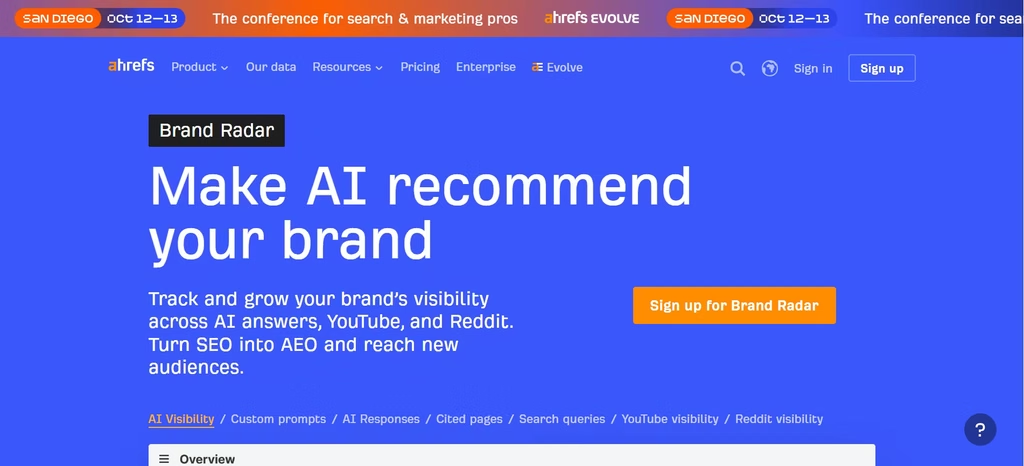
Overview. Custom Prompts track questions you choose, and the AI Visibility Index benchmarks any brand across a large prompt database.
Agency features. Not described on the Brand Radar page.
Supported engines. ChatGPT, Perplexity, Gemini, Copilot, AI Overviews and AI Mode, plus Claude on Custom Prompts.
Pricing and plan restrictions. Custom Prompts from €47 a month, the AI Visibility Index €179. Paid Ahrefs plans include 5, 10 or 20 prompts.
Reporting and multi client capabilities. Mentions, citations, AI share of voice and estimated impressions, updated daily, weekly or monthly per platform.
Strengths. The market wide index is handy for client pitches.
Limitations. Checks burn faster with every engine and update.
Best fit. Agencies already running client SEO in Ahrefs.
Which AI Visibility Tools for Agencies Fit Each Use Case?
There’s no single right answer. These matches rest on the features and prices above.
- Small agencies with a few client brands: Spyro AI Pro ($99, up to 10 brands, five engines) or Otterly.ai Standard ($189, unlimited workspaces).
- Growing agencies with many client projects: Spyro AI Agency (unlimited brands) or Rankability Agency (unlimited workspaces). Run the credit or query math first.
- SEO agencies needing citation and source analysis: Peec AI or Ahrefs Brand Radar.
- Agencies that prioritize white label reporting: Rankability, then demos of Peec AI agency plans and the Otterly.ai partner program.
- Agencies already using a large SEO suite: Semrush or Ahrefs, if per client costs still work.
- Enterprise agencies with procurement requirements: Profound.
- Agencies that need API access or automated reporting: Rankability, Otterly.ai Standard and up, AIClicks Pro and up, or Profound Enterprise.
How Do You Build a Multi Client AI Visibility Reporting Workflow?
AI visibility tools for agencies collect data. The workflow turns it into something a client renews for. Here’s the process I’d set up.
- Define each client’s goals and three to five competitors.
- Build prompts from real buyer questions, using sales notes, support tickets and Search Console. Start with 20 to 30.
- Pick the engines that matter. A B2B software client and a local dentist need different mixes.
- Set a baseline before changing anything.
- Check on a consistent schedule. Weekly suits most monthly reports.
- Monitor mentions, citations, sources and competitor visibility.
- Study what wins. Which pages get cited when a rival is named?
- Prioritize gaps by business value.
- Report changes with evidence and next actions.
- Review trends over months, not single answers.
Why trends? AI answers shift, and their sources aren’t always right. The Tow Center for Digital Journalism tested eight AI search tools on 1,600 queries and found incorrect answers to more than 60%, often citing syndicated copies or broken URLs (Columbia Journalism Review). One screenshot proves little. Repeated measurement does.
Sample monthly client report outline
- Executive summary in plain language
- Visibility trend by engine
- Mention and citation changes
- Competitor comparison and share of voice in AI search
- Important sources cited
- Work completed
- Recommended next steps
This is a suggested framework, not a claim that any tool builds every section automatically. Your team adds the commentary.
What Are the Best LLM Optimization Tools for AI Visibility?
People searching for the best LLM optimization tools for AI visibility usually mean one of five jobs:
- Monitoring whether a brand appears in AI generated answers.
- Analyzing citations and the sources a large language model leans on.
- Improving content so it answers questions clearly.
- Improving site access and structure so AI crawlers can read it.
- Measuring whether those changes line up with better visibility.
No category covers all five. Measurement tools (everything in this guide) handle jobs 1, 2 and 5. Content optimization tools score drafts but don’t track AI answers, so they aren’t visibility trackers. Technical audit tools check crawlability, and SEO suites mix several jobs.
Access matters more than people think. OpenAI’s documentation says sites that opt out of its OAI-SearchBot crawler won’t be shown in ChatGPT search answers (OpenAI). A tracker shows a client is missing. Only an audit shows whether robots.txt is why.
So which are the best LLM optimization tools for AI visibility on this list? The ones that pair tracking with action: Spyro AI (tracking, audits and a writer), Rankability (tracking, content projects and audits), AIClicks (tracking plus articles) and Semrush (tracking plus an AI search site audit). For the writing side of AI search optimization, read the AI content optimization guide.
What Are the Best Answer Optimization Tools for AI Visibility?
Answer optimization means stating a clear, direct, evidence backed answer near the top of a page, then supporting it. It helps readers first, and it tends to make a page easier for AI systems to quote. No format guarantees inclusion in an AI answer, though.
Google’s guidance says its ranking systems are designed to prioritize helpful, reliable information created to benefit people (Google Search Central). That’s a good test for every client answer you write.
The best answer optimization tools for AI visibility come as a pair: a tracker showing which questions a client is missing (ChatGPT brand monitoring is often where agencies start), and a writer or editor producing better answers. Then you measure again. New to the term? Here’s what answer engine optimization means.
How Much Do AI Visibility Tools for Agencies Really Cost at Scale?
Entry prices for AI visibility tools for agencies say little. Here’s an illustration using example numbers, not vendor pricing.
An agency runs 15 clients, 25 prompts each, on 4 engines.
- Prompt runs per check: 15 × 25 × 4 = 1,500
- Weekly checks: about 1,500 × 4.3 = 6,450 runs a month
- Daily checks: 1,500 × 30 = 45,000 runs a month
Same clients, same prompts, roughly seven times the volume. Frequency quietly drives cost on credit and check based plans.
Then add the other levers: client brands and workspace fees, prompts per client (per brand or shared), engines per prompt including add ons, extra domains or locations, seats (unlimited at some vendors, $99 a user at Semrush), export limits, API charges and billing term. Published annual discounts run from about 15% to 29%.
I’d start monthly and switch to annual once prompt sets settle. The AI visibility tools pricing guide has vendor by vendor numbers.
How We Compared These AI Visibility Tools for Agencies
This is a research based feature and pricing comparison, checked in 2026. I didn’t run controlled accuracy tests, manage client accounts in these tools or interview users, so nothing here is a measured result.
I reviewed each vendor’s official pricing page and documentation, plus research from Bain & Company, the Tow Center, Alphabet, OpenAI and Google. This comparison appears on the Spyro AI blog, so Spyro AI details come from its own pricing page and documentation. Tools were judged on client capacity, engines, prompt limits, frequency, reporting, white label options, history, permissions, integrations and total cost. Where a vendor didn’t publish a price or feature, I wrote “not publicly listed” or left it out. Where two pages from one vendor disagreed, I said so.
Key Takeaways
- The best AI visibility tools for agencies combine client capacity, the right engines and reports clients can read.
- “Unlimited workspaces” rarely means unlimited tracking. Check prompt, credit and check limits account wide.
- Price AI visibility tools for agencies at next year’s client count, including seats, domains and engine add ons.
- Tracking measures visibility. Content, technical fixes and answer optimization move it.
- Shortlist two tools, run the same prompts for two clients for a week, then compare the reports.
Frequently Asked Questions
What are the best AI visibility tools for agencies?
The best AI visibility tools for agencies in 2026 include Spyro AI, Rankability, Peec AI, Profound, Otterly.ai, AIClicks, the Semrush AI Visibility Toolkit and Ahrefs Brand Radar. The right choice depends on client count, the AI engines your clients need, reporting requirements and budget.
Can AI visibility tools for agencies track multiple clients?
Yes. Spyro AI Agency includes unlimited brands, Rankability includes unlimited client workspaces, and Peec AI, Profound, Otterly.ai and AIClicks offer agency plans or multiple projects. Most still cap prompts, credits or checks across the whole account.
Which AI visibility tools for agencies offer white label reporting?
Rankability lists agency branded reports with your logo and colors on every plan. Peec AI’s agency page promises white label reporting, and Otterly.ai’s partner program adds branded Looker Studio reports. Confirm which plan tiers include it before you buy.
How much do AI visibility tools for agencies cost?
Published plans suited to agencies range from $97 a month (Rankability Starter) to $399 a month (Spyro AI Agency) and $497 a month (Rankability Agency Pro). Peec AI and Profound don’t publish agency prices, and Semrush charges $99 per domain and per user.
What is the difference between AI visibility tracking and LLM optimization?
AI visibility tracking measures whether and how a brand appears in AI generated answers. LLM optimization is the work of improving content, sources and site access so large language models are more likely to use them. Tracking shows the gap, and optimization tries to close it.
How often should an agency track client AI visibility?
Weekly suits most clients on monthly reports. Daily makes sense during launches, campaigns or in fast moving categories. Keep the schedule consistent so trends stay comparable.
Can AI visibility reporting guarantee citations or recommendations?
No. AI answers vary between runs, and no tool or content format can guarantee a citation or recommendation. Reporting shows trends and gaps so you can decide what to improve.
Pick AI Visibility Tools for Agencies That Fit Your Client Count
Start with numbers. How many clients, how many prompts each, which engines and how often? Price two tools at that scale, run both on the same prompts for a week and compare what you’d actually send a client.
If Spyro AI is on your list, compare plans on the Spyro AI pricing page. Need a quick baseline for a prospect? Run the free AI visibility checker to see how ready their site is to be cited.