


SEO vs GEO vs AEO: How to Win Google and AI Answers in 2026


Quick Answer
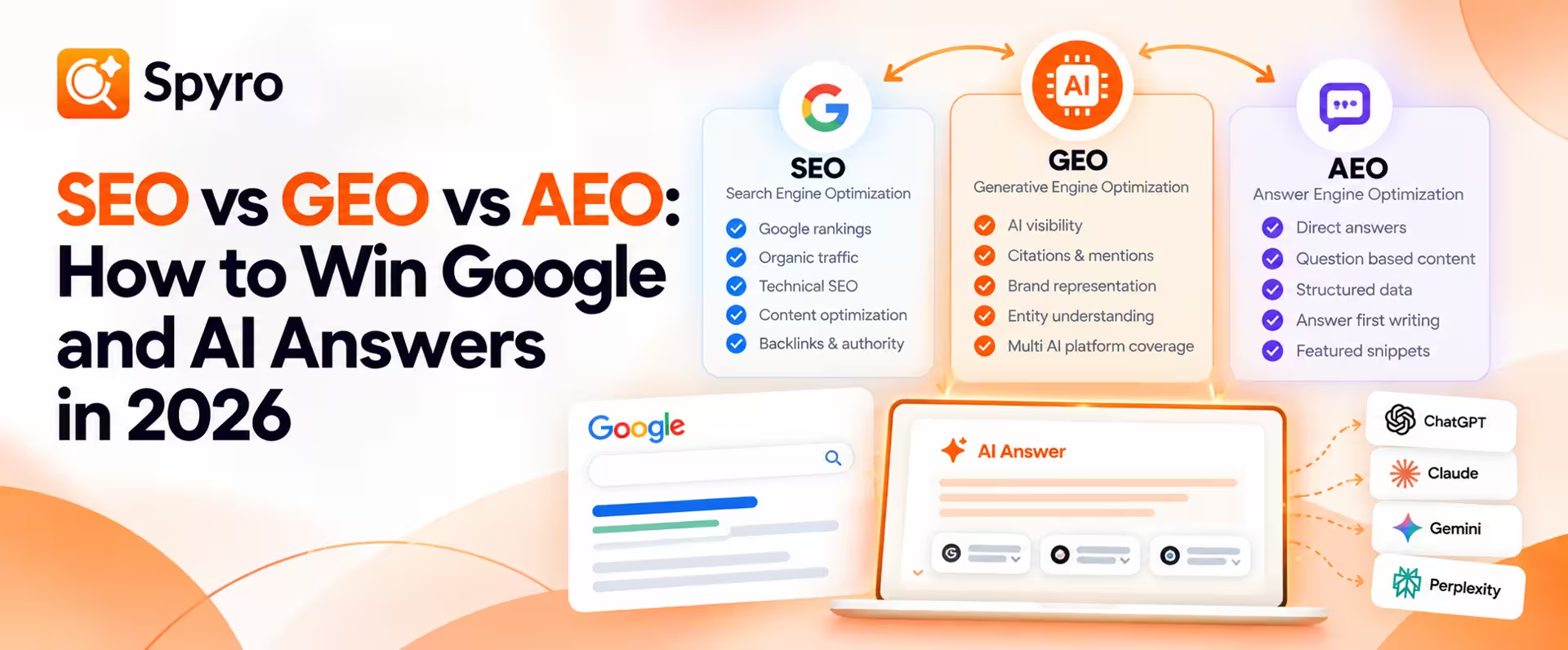
- SEO vs GEO vs AEO in short: SEO earns visibility in traditional search results. GEO raises the odds that generative AI tools find, cite and accurately describe your content. AEO structures content so answer engines can lift a concise, correct answer.
- They overlap heavily. One clear, crawlable, well sourced page can serve all three, and Google says optimizing for generative AI search is “still SEO” from its side.
- The SEO vs GEO difference is mostly target and scoreboard: rankings and clicks for SEO, citations and mentions for GEO, answer visibility for AEO.
- GEO and AEO don’t replace SEO. Crawling, indexing and snippet eligibility still sit underneath Google’s AI features.
- You need one search program with three lenses, not three separate budgets.
- Start by fixing crawl and index health, put direct answers at the top of key pages, then check how AI tools describe you every month.
SEO vs GEO vs AEO sounds like three competing jobs. It isn’t. SEO helps your website earn visibility in traditional search results. GEO, short for generative engine optimization, focuses on making content more likely to be discovered, understood, cited or represented accurately by generative AI systems. AEO, short for answer engine optimization, structures content so answer engines can identify it and return a concise answer. The three overlap, but they aren’t identical disciplines. Some people lump them together as AI search optimization.
Here’s the thesis I’ll defend. The SEO vs GEO debate misses the point, because modern search optimization needs a combined approach: keep the SEO fundamentals strong, and make your content easier for AI systems and answer engines to understand and cite. SEO isn’t dead. GEO doesn’t replace it. AEO doesn’t either.
I wrote this for startups, SMBs, mid sized companies and agencies who keep hearing all three acronyms in the same meeting. If you want GEO on its own first, read our guide on what is generative engine optimization. One disclosure: Spyro AI is our product. It appears in one labeled section near the end, and everything else stands without it.
SEO vs GEO vs AEO at a Glance
Here’s the SEO vs GEO vs AEO comparison in one table. Read the rows as differences of emphasis, not walls between three separate worlds.
| Area | SEO | GEO | AEO |
|---|---|---|---|
| Primary goal | Visibility, clicks and traffic from traditional search results | Being found, cited and described accurately in generative AI answers | Being the concise answer, or the source behind it |
| Main environment | Google and Bing results pages, snippets, other search features | ChatGPT search, Perplexity, Gemini, Claude, Google AI Overviews and AI Mode | Featured snippets, AI Overviews, voice and chat answers |
| Visibility signal | Rankings, impressions, clicks | Citations, brand mentions, how the brand is described | Being quoted or shown as the answer |
| Content approach | Match search intent, cover topics in depth, earn trust and links | Clear facts, consistent entities, supported claims, a presence beyond your site | Direct answers under question headings, short passages, FAQs |
| Technical focus | Crawlability, indexing, speed, canonical URLs, structured data | Access for AI crawlers, readable text in the HTML | Clean heading structure, semantic clarity, matching markup |
| Measurement | Search Console, rank tracking, analytics | Prompt based monitoring of mentions and citations | Question coverage, answer and snippet presence |
| Example outcome | Your guide ranks on page one | A buyer’s prompt names your brand and links your guide | The opening lines of your page become the answer to a “what is” query |
Notice how much the rows share, which is why SEO vs GEO is a question of emphasis. A page that ranks well usually has the crawlability and clarity AI tools need. A crisp direct answer helps a snippet, an AI Overview and a human reader at once. And a brand cited in AI answers usually has real authority somewhere on the web, which is an SEO asset too.
What Is SEO?
Search engine optimization is the practice of improving how visible your site and pages are in search engine results. It’s the oldest of the three terms and the base layer for the other two.
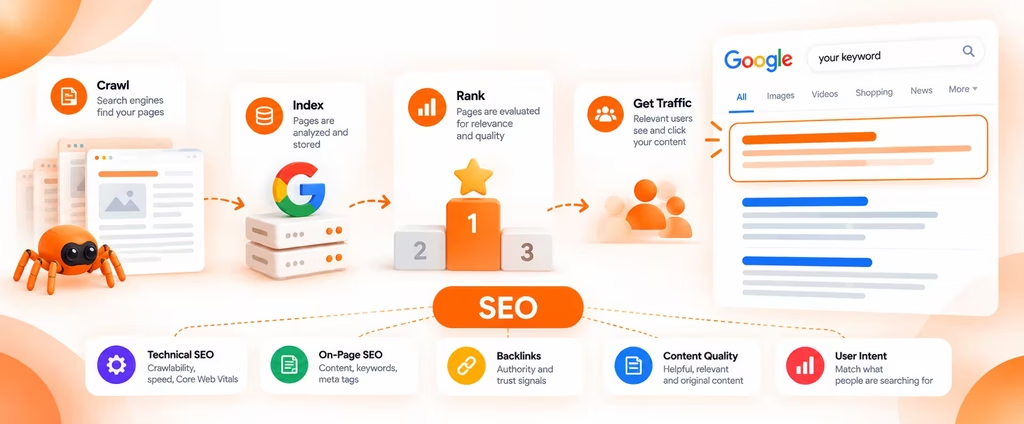
Google describes search in three stages: crawling, indexing and serving. Any stage can fail. A page that can’t be crawled can’t be indexed, and a page that isn’t indexed can’t rank. Google’s SEO starter guide is blunt about limits: no secret automatically ranks a site first, and indexing isn’t guaranteed.
Rankings come from many signals working together: relevance to the query and its intent, authority, content quality and page experience. Nobody outside Google knows the exact mix, so be wary of anyone who says one factor decides everything.
SEO work usually falls into five buckets:
- Technical SEO: crawlability, indexability, site architecture, canonical URLs, speed, mobile usability and Core Web Vitals.
- On page SEO: titles, headings, copy, internal links and structured data that describes the page honestly.
- Search intent: working out whether the searcher wants a definition, a comparison, a product or a how to.
- Authority: backlinks, mentions and visible authorship.
- Measurement: impressions, clicks, rankings and conversions, mostly from Search Console and analytics.
What changed in 2026 isn’t the definition. It’s the results page. AI Overviews now appear above the links on many searches, and AI Mode adds a conversational answer experience of its own. That’s why the other two acronyms exist. In any SEO vs GEO comparison, SEO is the layer everything else stands on.
What Is GEO?
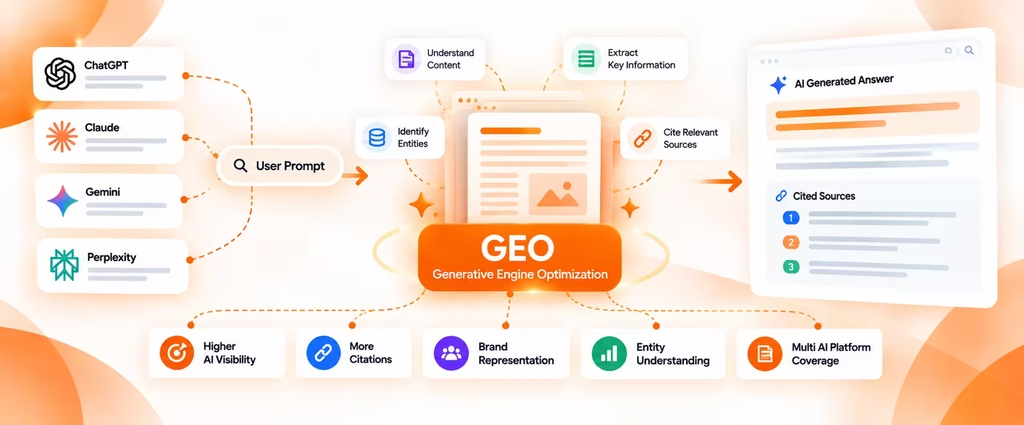
Generative engine optimization is the practice of making your content and brand easier for generative AI systems to find, understand, cite and represent correctly when they answer a question. If SEO asks “can this page rank?”, GEO asks “will an AI tool use this page, and will it describe us accurately?”
The term has a traceable origin. A November 2023 paper, GEO: Generative Engine Optimization, later presented at KDD 2024, reported that some content changes raised visibility in generative responses by up to 40% in the authors’ own tests. That’s a research result on a benchmark, not a promise for your site, and it says nothing about search rankings.
GEO usually covers these pieces:
- AI generated answers and source selection: which pages a tool retrieves, links or quietly uses.
- Citations and brand mentions: whether you’re named, linked or both.
- Entity understanding: whether a system can tell who you are and what you sell. Consistent names and descriptions help.
- Factual clarity and structure: specific, checkable statements under descriptive headings.
- Topical relevance: covering a subject and its neighboring questions.
- AI visibility: the result of all of the above, observed through prompt based monitoring.
That last item is where SEO vs GEO work really diverges. AI answers vary between runs and products, so a rank tracker can’t show your standing. You test buyer prompts across ChatGPT, Gemini, Claude and Perplexity, record whether you’re mentioned or cited, and watch the trend.
One honest note. GEO is an evolving field with no agreed ranking formula, and practitioners don’t even agree where GEO ends and AEO begins. I’ll flag thin evidence as we go.
What Is AEO?
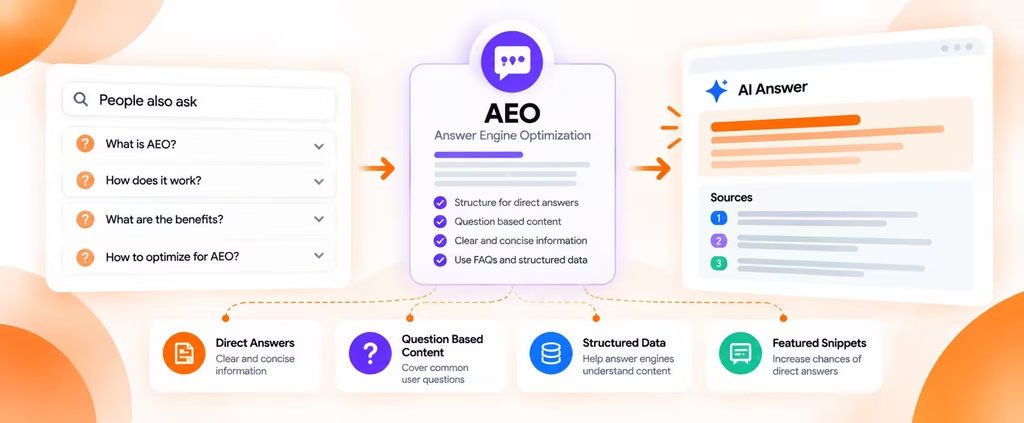
Answer engine optimization is the practice of structuring content so search and AI systems can extract a direct, concise answer to a question. An answer engine is anything that replies with an answer instead of only a list of links: a featured snippet, an AI Overview, a voice assistant, a chat tool.
AEO grew out of featured snippets and voice search, and conversational tools widened it because people now type full questions and expect a straight reply. Content that suits answer engines usually has:
- Direct answers in the first sentence or two under a heading.
- Question based headings that mirror how people ask.
- Concise passages, such as a 40 to 60 word definition that’s easy to lift.
- FAQs for the follow ups buyers actually ask.
- Structured content and semantic clarity: lists and tables where they help, defined acronyms, consistent terms.
Next to the broader SEO vs GEO question, AEO is the narrowest of the three. For the focused version, see our guide on what is answer engine optimization. AEO also suits conversational search. When someone asks a follow up in a chat tool, the system needs another clean passage to quote, and pages built around real questions supply them.
What Is GEO vs SEO?
If you’ve typed “what is geo vs seo” into a search box, here’s the direct answer. SEO optimizes for visibility in search results, usually measured by rankings and organic traffic. GEO optimizes for visibility in generative AI experiences, where success means being retrieved, cited and described accurately inside an answer.
The SEO vs GEO answer in short:
- SEO optimizes for search visibility. GEO optimizes for visibility in generative AI experiences.
- SEO commonly focuses on ranking and organic search traffic. GEO adds AI generated answers, source selection and citations.
- Strong SEO fundamentals can support GEO. Crawlable, indexed, clear, trustworthy pages are most of what AI systems need to find you.
I haven’t promised a GEO formula, because there isn’t one. GEO is evolving, AI systems differ in how they select and present sources, and the same system can answer the same prompt differently on different days.
Google adds a twist. Its guide to optimizing for generative AI features says that, from Google Search’s perspective, optimizing for generative AI search is optimizing for the search experience, and thus still SEO. That covers Google’s own features, not ChatGPT or Perplexity, where public documentation is thinner. That’s exactly why monitoring matters.
SEO vs GEO: What’s the Difference?
The SEO vs GEO comparison gets clearer one dimension at a time. Here are ten.
SEO vs GEO: Goal
SEO aims to rank pages and earn clicks. GEO aims to get AI tools to find, use, cite and correctly describe your content. One goal is a position. The other is a presence inside an answer.
SEO vs GEO: Search Environment
SEO lives on results pages: links, snippets, maps, video and AI Overviews. GEO lives in generated answers, from Google’s AI features to ChatGPT search, Perplexity, Gemini and Claude, each with its own interface and way of showing sources.
SEO vs GEO: Content Structure
SEO rewards topic coverage that matches intent. GEO looks closer at passages, because AI systems often work with pieces of a page. Clear headings and self explanatory facts travel better than tangled paragraphs. Google says you don’t need to chop content into tiny pieces for its systems, so this is plain readability, not a formatting trick.
SEO vs GEO: Technical Requirements
SEO needs crawlable, indexable, fast pages. GEO needs that plus a deliberate decision about AI crawlers: which you allow, which a firewall quietly blocks, and whether key text sits in the page source.
SEO vs GEO: Authority
SEO authority has long meant links from trusted sites. GEO authority is broader. AI systems can draw on how and where your brand is discussed across the web, though nobody outside the AI companies knows the weighting.
SEO vs GEO: Citations
SEO has backlinks, persistent links that pass signals between pages. GEO has citations, references inside a generated answer that can change the next time someone asks.
SEO vs GEO: Brand Mentions
SEO values brand awareness but struggles to measure it. GEO makes mentions a first class metric: does the answer name you at all, even without a link?
SEO vs GEO: User Intent
SEO serves every intent from quick lookup to purchase. GEO leans toward full sentence questions put to chat tools, such as comparisons and recommendations, where an AI answer replaces a list of links.
SEO vs GEO: Measurement
SEO has mature tools: Search Console, rank trackers, analytics. GEO measurement is newer: monitor prompts, record mentions and citations, note competitors. Definitions vary by platform, so write down how you count.
SEO vs GEO: Optimization Workflow
SEO runs in cycles of research, publish, build links, track and update. GEO adds a loop: choose prompts, test them across AI tools, find which sources get cited, fix gaps, test again. Both loops can share one content calendar.
If you keep one idea from this list, make it this: SEO vs GEO is mostly a difference of target and scoreboard, not fundamentals. The same clean, well sourced page serves both.
SEO vs GEO vs AEO: How the Three Fit Together
Think of SEO vs GEO vs AEO as three overlapping questions about the same page.
- SEO asks: can search engines find, index and rank this page? Outcome: visibility in traditional search.
- GEO asks: will generative AI tools use this page, cite it and represent our brand accurately? Outcome: visibility and representation in generative AI experiences.
- AEO asks: can a system lift a clear, correct answer from this page? Outcome: visibility as the direct answer or its source.
These are overlapping optimization practices, not three isolated systems. Descriptive headings, for example, help rankings, snippets and AI retrieval at once.
They diverge at the edges. Only SEO cares about ranking position. Only GEO cares how an AI tool describes you when nobody clicks. Only AEO cares whether two sentences under a heading stand alone as an answer. Those edges justify three names even when the day to day work is one program. Don’t spend a minute arguing over labels.
Does GEO Replace SEO?
No. GEO doesn’t replace SEO, and framing SEO vs GEO as either or is the wrong model. The reason is structural.
SEO still supports what AI visibility depends on:
- Crawling and indexing. Google says its generative AI features use publicly accessible, crawlable content, and that a page must be indexed and snippet eligible to appear in them.
- Search visibility and organic traffic. Many searches still end in a click on a regular result, and organic is still a major measurable channel for most sites.
- Discoverability. Other AI tools also need to find your pages, often through the same open web signals search engines use.
- Authority. Trust you build for rankings carries over to how credible your content looks everywhere else.
GEO adds what SEO reporting doesn’t capture: which sources an AI tool selects, whether it cites you and how it represents your brand. That’s a real gap worth closing. But the SEO vs GEO relationship is layered, with GEO on top. It doesn’t push SEO out.
Nobody has published a verified model of how the major AI products pick sources, so claims that GEO “works like this” deserve a raised eyebrow. What we can say is that the foundation is shared, and clearer content plus monitoring is cheap next to being absent from answers your buyers read.
Does AEO Replace SEO?
No, and the logic is similar. AEO is complementary: the answer shaped part of the larger job. It adds useful ideas:
- Answer intent. Some queries want a fact, a definition or a short how to. AEO trains you to spot them and answer head on.
- Featured snippets, where relevant. Google chooses featured snippets automatically from pages it already indexes, so no tag guarantees one. You can control whether your page holds a clean answer worth selecting.
- Question based content and structured information. Headings and FAQs that mirror real questions, plus lists and tables where the content really is a list or a process.
- Conversational search. Content that still works as the second or third answer in a back and forth.
None of it works without the SEO layer. An answer on a page that isn’t crawled, indexed or trusted doesn’t get lifted by anyone. So AEO makes your SEO content more answerable. It doesn’t let you skip SEO.
How Google Search and AI Answers Differ
The clearest SEO vs GEO contrast is what the searcher receives. A traditional results page is a ranked list of links plus features. The searcher scans, picks a result and leaves, so position decides who gets attention. An AI generated answer experience gives a written response first, often blending several sources, showing citations and inviting follow up questions that carry context forward. The searcher may never open a source.
That creates real differences:
- Ranked links vs generated summaries: you compete for a position in one, and for a place in the synthesis in the other.
- Citations and source selection: AI answers show a handful of sources, and which ones appear differs by product. An AI product may run several retrieval steps and then write from what it retrieved.
- Follow up questions and conversational context: the same question can get a different answer depending on what was asked earlier, which is one reason pages that cover neighboring questions get more chances.
- Multiple sources: one answer can combine several pages, so you’re often optimizing a passage or a fact, not a whole page.
Don’t assume every AI product works like Google’s. ChatGPT search, Perplexity, Gemini, Claude and Google’s own features use different retrieval systems, crawlers and interfaces, so treat any universal rule as a hypothesis until you’ve tested it.
How AI Overviews Change SEO
Google AI Overviews are AI generated summaries on some Google searches, with links to supporting pages. Google says AI Overviews and AI Mode may use query fan out, running several related searches across subtopics to build a response, which can surface a wider set of links.
How common are they? Comscore data reported by Search Engine Land put AI Overviews on 39.4% of US desktop Google searches in June 2026, up from 25.8% in July 2025. That’s an industry panel measure, not a Google statistic, but the direction is clear.
And how do people behave? A Pew Research Center study of 900 US adults and 68,879 Google searches in March 2025 found clicks on a traditional result in 8% of visits when a summary appeared, versus 15% when it didn’t. Clicks on a link inside the summary happened in about 1% of visits. One study, one month, one country, so it’s no law of nature.
So what changes?
- Traditional rankings still matter. Google says its AI features are rooted in its core ranking and quality systems, and no special markup or AI file is required.
- Being cited or represented adds a second visibility question. Even when you rank, the Overview may answer first.
- Nothing is guaranteed. No optimization guarantees an AI Overview citation. Google’s guide warns that no third party tool can see its internal ranking or AI systems.
- Monitor both. The SEO vs GEO lines can move in different directions, so watch organic performance and AI visibility separately.
Google now reports on this too. Per Search Engine Land’s coverage of the August 31, 2026 rollout, Search Console’s AI reports show impressions by page, country, device and date for AI Overviews and AI Mode, but not clicks.
How AI Systems Choose Sources
AI systems are proprietary, and their selection can vary by product, query and day. So for SEO vs GEO source selection, here’s what I can responsibly say: these factors can influence which sources get used, based on how retrieval systems generally work and what companies like Google have documented.
- Relevance: the page has to match the question and often the sub questions behind it.
- Authority: systems can consider whether a source is established, widely referenced or backed by real expertise.
- Factual clarity and context: specific, checkable statements are easier to reuse accurately, and the author, date and site focus help judge what a passage means.
- Content quality: original, well organized pages generally make better source material than thin or duplicated ones.
- Entity relationships: systems may connect a brand to topics, products and people, and consistent naming helps.
- Source accessibility: if a crawler can’t fetch the text, it can’t use it.
- Freshness, where relevant: recent information may carry more weight on topics that change.
- Corroboration: when several credible places say consistent things about you, a system may be more comfortable repeating them.
For Google, the picture is clearer. Its guide says its AI features use retrieval that relies on core ranking systems to find relevant, up to date pages, and that seeking inauthentic mentions across the web isn’t as helpful as it might seem. Earn mentions by being worth mentioning.
For other tools, treat published studies cautiously. Many come from vendors who sell software in this space (Spyro AI included) and report correlations from specific samples, not confirmed algorithms. For more on citation factors, see our article on how AI search engines cite sources.
Why AI Citations Matter
An AI citation is a reference an AI answer makes to a source: a link, a footnote, a named site or a source card. Forms differ across tools, so avoid sweeping statements.
- They can send qualified visibility. Someone who clicks a cited source after reading an answer has usually narrowed the question. Volume is small (remember Pew’s roughly 1%), but those visitors are often further along.
- They shape how people see your category. When an answer names three vendors and you’re not one, that lost impression never shows up in analytics.
- Mentions without links still matter. “You could try [your brand]” with no link still plants your name, and that’s often the bigger brand win.
- They’re measurable. Sample fixed prompts, record when you’re cited, mentioned or missing, and track the trend.
Citations are where SEO vs GEO reporting diverges most, and they aren’t backlinks. A backlink is a persistent link that search engines can use as a signal. A citation is a reference inside a generated answer that may change next time. And AI citations aren’t a confirmed Google ranking factor, so don’t build a link strategy around them. For practical help, see our guide on how to get cited in ChatGPT and Perplexity.
Can AI Crawlers Read Your Website?
If an AI tool can’t fetch your page, nothing else in this guide helps with that tool. So it’s the first check I’d run in any SEO vs GEO audit.
AI crawlers are automated programs run by AI companies, and they don’t all do the same job. Some collect content that may be used for training, some build an index for AI search, and some fetch a page because a user just asked. Mixing them up is how sites accidentally block the one they wanted to allow. Examples, from each company’s documentation (check current docs before changing anything):
- OpenAI:
OAI-SearchBotsurfaces sites in ChatGPT search,GPTBotrelates to training, andChatGPT-Userhandles user initiated requests. Sites opted out ofOAI-SearchBotwon’t show in ChatGPT search answers, though they can still appear as navigational links. See OpenAI’s crawler documentation. - Anthropic:
ClaudeBotrelates to training data,Claude-Usersupports user questions andClaude-SearchBotrelates to search quality. Anthropic says its bots honor robots.txt. See Anthropic’s crawler explanation. - Perplexity:
PerplexityBotsurfaces sites in Perplexity search and, per Perplexity, isn’t used for foundation model training.Perplexity-Userhandles user triggered requests and generally ignores robots.txt. See Perplexity’s bot documentation.
Bots aren’t used identically across products, so decide per bot, on purpose. Several things control whether they reach you:
- robots.txt tells crawlers which URLs they may access. Google’s robots.txt introduction stresses it’s advisory: it can’t force a crawler to behave, and it isn’t a way to hide pages from Google.
- Access controls and server responses. A firewall, CDN or bot protection layer can block AI crawlers even when robots.txt welcomes them, and a 403, a 429 or a challenge page means the crawler never saw your content. It’s a silent block that surprises many teams.
- Accessibility and JavaScript. Text locked in images or behind logins is hard to use. Google documents how it renders JavaScript, but other crawlers vary and often don’t say, so keep key text in the HTML your server returns.
- Indexing vs AI retrieval. Being indexed by Google doesn’t mean another AI tool has read you, and blocking a training bot isn’t blocking a search bot.
Google has its own control too. Per the Search Engine Land coverage above, opting out of its generative AI search features through the new property level setting doesn’t hurt standard rankings, and AI training is governed separately by Google-Extended.
To check your setup, Spyro AI’s free AI Crawler and robots.txt Checker tests access for GPTBot, ClaudeBot, PerplexityBot and Googlebot and flags servers that block bots robots.txt allows.
What Is llms.txt and Does Your Site Need It?
llms.txt is a proposed Markdown file, placed at a site’s root, that gives language models a concise overview of the site and links to its most useful pages. Jeremy Howard proposed it in 2024, and llmstxt.org says it’s meant to help agents use a website by offering information in one accessible place instead of making them wade through navigation and scripts. The project describes an updated version in August 2026.
So does your site need one? In the SEO vs GEO conversation this is where hype runs highest, so here’s the honest picture.
- It’s a proposal, not an established standard. robots.txt has years of wide support. llms.txt is an emerging convention that some tools read and many don’t.
- Google says it isn’t needed. Its generative AI guide says you don’t need new machine readable files, AI text files, markup or Markdown to appear in Google Search, and that they neither help nor harm visibility or rankings.
- Adoption is hard to pin down. I won’t quote a figure I can’t source. How consistently other AI products read the file is undocumented.
- It can’t replace robots.txt. The proposal says the two serve different purposes. robots.txt covers what access is acceptable. llms.txt offers information on demand.
Don’t treat llms.txt as a Google ranking requirement, and don’t expect it to guarantee AI visibility. For developer documentation or a large knowledge base, a clean llms.txt is a reasonable low cost experiment. For a services business with forty pages, spend the time on content and crawl fixes. Do the established standards (robots.txt, sitemaps, canonical tags, structured data) well first, then try emerging proposals.
How to Optimize Content for SEO, GEO and AEO
This is the SEO vs GEO workflow I’d run on any important page. Each step helps at least two of the three disciplines.
- Identify search intent. Decide what the searcher wants: a definition, comparison, price, how to or recommendation. Search a few target queries, then ask an AI tool the same question and compare the answer shapes.
- Build topical coverage. List the neighboring questions a buyer asks before and after the main one. Google says its AI features can run related searches across subtopics, so a page or cluster that handles follow ups has more ways to be useful.
- Write clear answers. If a stranger read only that paragraph, would they get the point? If not, rewrite it.
- Use descriptive headings. “Pricing” is a label. “How much does a roof replacement cost in 2026?” is a question the paragraph answers.
- Put important information near the relevant question. Answer right under the heading, then add context.
- Support claims with evidence. “Pew Research found 8% of visits” beats “studies show clicks are falling.”
- Use authoritative sources. Prefer official documentation, research, regulators and established news outlets over a competitor’s marketing blog.
- Improve entity clarity. Describe who you are and what you sell in the same words across your homepage, About page, listings and profiles.
- Keep content current. Show a visible updated date, and actually update. A stale pricing page misleads readers and any tool that repeats it.
- Strengthen internal links. Use descriptive anchors, and link pillar pages down to supporting pages and back up.
- Make pages crawlable. Check robots.txt, noindex tags, canonicals, server responses and whether the answer is in the HTML.
- Monitor organic rankings. Track impressions, clicks and positions for priority queries.
- Monitor AI visibility. Test a fixed list of buyer prompts across the AI tools your customers use, on a schedule.
- Refresh based on evidence. When a page slips, disappears from AI answers or gets described wrongly, fix the answer, add the missing sub question, correct the stale fact and check again.
Here’s a hypothetical example of steps 4 and 5. Imagine an agency page headed “Our approach.” A reader, a snippet system and an AI tool learn nothing from that. Rename it “How does an SEO audit work?” and open with two sentences defining the audit, then list what’s checked. Same services, much easier to quote.
Why Answer First Content Matters
Answer first content means each section opens with the direct answer to its heading, then explains, qualifies and gives examples. It’s one of the few SEO vs GEO tactics everyone agrees on, and it helps four audiences at once:
- Readers: most visitors skim for one thing, and they stay for the detail if they want it.
- Search engines: a clear opening under a descriptive heading makes the page’s purpose obvious and gives snippet systems a clean passage.
- Answer engines: a system built to return a short answer needs a short answer to return.
- AI systems: a tool assembling a response from several sources can reuse a self contained passage far more safely than one that says “as mentioned above.”
The caveat again: answer first writing doesn’t guarantee a snippet, an AI Overview or an AI citation, and Google says you don’t need to write a special way for generative AI search. It’s simply good writing. To check your pages, Spyro AI’s free SEO and GEO Audit lists answer first openings and question style headings among its GEO checks. Or do it by hand: read the first two sentences under each heading and ask whether they answer it alone.
Technical SEO for GEO and AEO
Technical SEO remains the foundation, and it’s the part teams neglect when everyone’s excited about AI. If crawlers can’t reach and read your pages, clever writing won’t rescue them.
- Crawlability and indexability. Link important URLs, list them in your XML sitemap, and hunt for stray
noindextags, soft 404s and thin duplicates. Google says a page must be indexed and snippet eligible to appear in its AI features. - robots.txt and canonical URLs. Keep robots.txt short and deliberate, reviewed whenever you change platforms or security layers. Point duplicates at the preferred canonical version.
- Internal links. Use descriptive anchors and a logical hierarchy.
- Page speed and mobile usability. Fast, usable pages serve users and cost less to crawl.
- Structured data. Add schema that accurately describes the page. Google’s guidance says to make sure structured data matches visible text, and that no special schema is needed for AI features. So treat markup as helpful description, not a GEO switch. Spyro AI’s free Schema Markup Validator checks your structured data markup.
- Clean, accessible HTML. Real headings, lists and tables, alt text and text that isn’t baked into images help people and parsers alike.
- JavaScript rendering and server reliability. If content only appears after scripts run, test the raw HTML. Frequent errors and timeouts teach crawlers your site is unreliable.
None of this is new, and that’s the point. In the SEO vs GEO debate, the technical stack barely changes. You keep the old one healthy and add a few checks for AI crawler access.
Content Quality Signals That Matter Across SEO, GEO and AEO
Nobody outside the search and AI companies can hand you a verified list of proprietary signals, so I’ll stick to qualities Google documents plus plain sense about what any answer system would rather quote.
- First hand experience and original information. Specifics, trade offs, your own data and examples give people and AI tools a reason to cite you. Google’s guide asks for a unique point of view and non commodity content.
- Factual accuracy and source quality. A wrong number gets quoted as often as a right one. Check against primary sources, and link official documentation and original research.
- Clear authorship. A named author with a real role makes content easier to evaluate.
- Useful examples and topical depth. Cover a subject well enough that no one needs five other tabs.
- Freshness. Update pages whose facts or prices age fast, and show the date.
- Clear terminology and consistent entities. Define acronyms once and keep brand, product and people details identical wherever they appear.
These matter equally on both sides of SEO vs GEO and don’t depend on any one AI product, which makes them the safest long term investment on the list.
How to Measure SEO, GEO and AEO
Measurement is where SEO vs GEO vs AEO looks most different. Report them side by side, but never mash them into one number.
SEO metrics: organic impressions and clicks, rankings for priority queries over time, click through rate, indexed pages and conversions.
GEO metrics: AI mentions, AI citations, brand visibility (is the description accurate and current?), prompt visibility (which questions you win), competitor visibility and source frequency, meaning which sites AI tools cite most for your topic.
AEO metrics: answer visibility, featured answer presence, question coverage (how many real questions have a clear, direct answer on your site) and how well those answer sections hold up over time.
Three cautions apply. Metrics and definitions vary by platform, so write down your counting rules. AI answers vary between runs, so sample the same prompt several times and look at frequency, such as “mentioned in 3 of 5 checks.” And Google’s AI reporting is young: as noted earlier, Search Console’s AI reports show impressions without clicks.
For the SEO vs GEO scoreboard, keep it simple: one report, two sections, organic performance and AI visibility. If organic holds steady while AI mentions drop, you’ve found something your rank tracker would never show.
A Practical SEO + GEO + AEO Strategy for 2026
This SEO vs GEO sequence works with one marketer or twenty. Each phase builds on the last, so don’t jump to monitoring if your pages can’t be crawled.
- Phase 1, technical SEO foundation (weeks 1 and 2). Audit crawlability, indexing, canonicals, robots.txt, speed and mobile. Check which AI crawlers can reach you and fix silent blocks.
- Phase 2, search intent and content structure (weeks 2 to 4). Pick your 10 most valuable pages. Map each to one intent, rewrite weak headings and add a visible FAQ where buyers genuinely ask follow ups.
- Phase 3, answer first content (weeks 3 to 6). Rewrite section openings to answer the heading in one or two sentences. Make definitions stand alone and replace vague claims with specific ones.
- Phase 4, authority and source support (from week 4). Add named, linked sources, publish something original on each key topic and make authorship visible. Earn real mentions through partnerships, reviews and community work.
- Phase 5, AI visibility monitoring (start by week 4). Write 20 to 50 buyer prompts. Run them across ChatGPT, Gemini, Claude, Perplexity and Google AI Overviews, and record mentions, citations, descriptions and competitors.
- Phase 6, content updates based on observed results (monthly). Find where you’re missing, which sources get cited instead, and what’s described wrongly. Update, then recheck next cycle.
How it plays out depends on who you are:
- SMBs: one person in the marketing seat? Run Phases 1 to 3 on five to ten money pages and check 10 buyer prompts by hand each month.
- Marketing teams: give each priority page an owner and put AI visibility beside organic traffic in the monthly report. Agree an answer first style so writers stay consistent.
- Agencies: turn the phases into a repeatable SEO vs GEO service: baseline audit, a prompt set agreed with the client, a monthly report with organic and AI sections, and a standard refresh process. Promise the work and the reporting, never rankings or citations.
SEO vs GEO vs AEO: Which Should You Focus On?
This table doesn’t rank one discipline above another, because they answer different goals.
| If your goal is… | Focus on… | Where to begin |
|---|---|---|
| More Google organic traffic | SEO | Technical health, search intent, internal links, authority |
| Better visibility in AI generated answers | GEO | Crawler access, entity clarity, prompt monitoring, credible mentions |
| More direct answers for question based searches | AEO | Question headings, answer first sections, FAQs |
| Your brand is described wrongly by AI tools | GEO | Consistent facts across your site and the web, plus monitoring |
| All three | Combined SEO + GEO + AEO | The six phase plan above |
Whichever side of SEO vs GEO you lean toward, if you only have time for one thing this month, confirm your important pages are crawlable and indexed. Every other row depends on it.
Where Spyro AI Fits Into SEO, GEO and AEO
Spyro AI is our product, so weigh this section accordingly. I’ll stick to what it does today, per its documentation, and say where it doesn’t help.
- AI visibility tracking and monitoring. You add buyer questions as tracking prompts, and Spyro AI checks whether ChatGPT, Gemini, Claude, Perplexity and Google AI Overviews mention your brand. Results show frequency, such as mentioned in 3 of 5 checks, and run again every week.
- Competitor visibility. SEO vs GEO reporting usually misses this: a share of voice view and a ranked table of brands mentioned for your prompts.
- SEO and GEO auditing. A Site Health score for SEO and an AI Search Health score, issues sorted by severity, history and a PDF. The free SEO and GEO Audit needs no account and crawls up to roughly 20 pages.
- Free checkers. The AI Crawler and robots.txt Checker and the AI Visibility Checker also work without signup.
- Rank tracking and content. Keyword tracking with a Google Search Console connection, plus an AI writer with a GEO mode.
Now the limits. The Starter plan covers two of the five AI engines, so check your plan. Checks run weekly, not daily. Spyro AI doesn’t track Google AI Mode, Microsoft Copilot or Grok, and it doesn’t replace Search Console. No tool, ours included, can promise a ranking, an AI Overview citation or a ChatGPT mention. Google’s own guide warns site owners to be wary of third party tools that promise ranking success or claim to use internal Google metrics, and that applies to every vendor here, including us.
Tools such as Semrush and Ahrefs also provide AI search related capabilities within their wider SEO suites, and if you already pay for one, that may be the simplest place to start. Our comparison pages show where Spyro AI differs, with real strengths listed for the others.
Key Takeaways
- In SEO vs GEO vs AEO, SEO remains the foundation: crawling, indexing, relevance and authority decide who gets found, and GEO and AEO both depend on them.
- GEO extends the target into AI generated answers (retrieved, cited, described accurately), and AEO focuses on answer shaped content such as direct answers, question headings and FAQs.
- Clear, factual, well sourced content can serve Google, snippets, AI Overviews and other AI tools at once, so you rarely need separate pages.
- Nothing here is guaranteed. Neither SEO, GEO, AEO nor llms.txt promises rankings, snippets or AI citations, and AI systems differ in how they choose sources.
- Measure both worlds: organic performance in Search Console, AI visibility through prompt monitoring, then refresh pages based on what you see.
Frequently Asked Questions
What is the difference between SEO and GEO?
SEO improves visibility in traditional search results, measured by rankings, clicks and traffic. GEO improves how likely generative AI tools are to find, cite and accurately describe your content, measured by mentions and citations. They share many fundamentals, so strong SEO supports GEO.
What is GEO vs SEO?
It’s the comparison between optimizing for generative AI answers and optimizing for traditional search results. SEO targets visibility and traffic from listings. GEO adds source selection, citations and brand representation inside AI answers. GEO is evolving, and no single formula is confirmed across AI systems.
Does GEO replace SEO?
No. The SEO vs GEO choice isn’t either or. SEO still supports crawling, indexing, discoverability, organic traffic and authority, and Google says its AI features need indexed, snippet eligible pages built on its core ranking systems. GEO adds attention to AI source selection, citations and brand representation.
What is AEO?
Answer engine optimization structures content so search and AI systems can extract a direct, concise answer, using answer first writing, question headings, short passages and FAQs. It complements SEO and can’t guarantee a featured snippet.
What is the difference between SEO, GEO and AEO?
In the SEO vs GEO vs AEO comparison, SEO aims for visibility in traditional results, GEO for accurate representation in generative AI answers, and AEO for visibility as a direct answer or answer source. One clear, crawlable, well sourced page can serve all three, with different metrics for each.
Is GEO important for Google?
Google’s view is that optimizing for generative AI search is optimizing for the search experience, and thus still SEO, so there’s no separate Google GEO checklist. But AI Overviews and AI Mode are part of Google Search now, so clear answers and crawlable content matter there.
How does GEO affect AI search visibility?
GEO work can make it more likely that AI tools find, understand and cite your content and describe your brand correctly. The effect varies by product and prompt, and nothing guarantees a citation. That’s why GEO includes monitoring: test real prompts, see what changes and adjust.
Can SEO help with GEO?
Yes, a lot. Crawlable, indexed, fast, trustworthy pages with clear structure are the raw material AI tools need, and Google says its AI features rely on indexed, crawlable content. Good SEO won’t guarantee AI visibility, but weak SEO makes it much harder.
SEO vs GEO: which should a small business start with?
Start with SEO fundamentals, because pages must be crawlable and indexed before any system can use them. Then add GEO and AEO habits to priority pages, such as answer first openings and question headings, and check a handful of buyer prompts in AI tools each month.
SEO vs GEO vs AEO: do I need all three?
You need one search program with three lenses. SEO vs GEO vs AEO describes overlapping goals, so the same crawlable, clear, well sourced page can serve all three. Prioritize SEO health first, then answer first structure for AEO, then AI visibility monitoring for GEO.
How do I optimize content for AI answers?
Answer the question directly under a descriptive heading, support claims with named sources, keep brand facts consistent, show authorship and dates, and make sure crawlers can read your pages. Cover neighboring questions too, then test real prompts and refresh what’s missing.
Does llms.txt improve AI visibility?
There’s no confirmed evidence that it does. llms.txt is a proposed file, not an established standard, and Google says such files neither help nor harm Google Search visibility. It doesn’t replace robots.txt. For documentation heavy sites it can be a cheap experiment, nothing more.
Conclusion: SEO, GEO and AEO Work Together
SEO vs GEO vs AEO isn’t a contest with a winner. SEO remains foundational: it’s how your pages get crawled, indexed, trusted and found. GEO expands the target into AI generated experiences, where being cited and described correctly is its own kind of visibility. AEO focuses on answer oriented visibility, making your content easy to quote when someone asks a question.
The sensible answer to SEO vs GEO is one integrated search strategy. Keep your technical and content fundamentals strong, write answer first, support claims with real sources, and measure both traditional search and AI visibility. Expect details to keep changing, because the AI products will, and revisit your plan every few months.
If you want to see how your site performs across SEO and AI visibility signals, try Spyro AI’s free SEO and GEO Audit. It needs no account and gives you a prioritized list of fixes to start with.