Best AI Visibility Tools in 2026, Tested for SMBs, Teams and Agencies



Quick Answer: What Are the Best AI Visibility Tools in 2026?
The best AI visibility tools check whether ChatGPT, Gemini, Perplexity and Google AI Overviews mention or cite your brand, then show how you compare with competitors over time. No single pick suits everyone. Here’s how I’d match the best AI visibility tools to your situation:
- Small budget, one or two brands: Spyro AI Starter ($29 a month, two engines) or Otterly.AI Lite ($29 a month, four engines).
- Marketing team that wants tracking plus content: Spyro AI Pro ($99 a month, five engines, up to 10 brands) or AIClicks Pro ($189 a month).
- Agencies with many clients: Spyro AI Agency ($399 a month, unlimited brands) or Rankability (from $97 a month, unlimited client workspaces).
- Teams already inside a big SEO suite, or buying for enterprise: Semrush, Ahrefs Brand Radar or Profound.
Why does any of this matter? AI answers don’t behave like search rankings. Researchers who ran 2,961 prompts across ChatGPT, Claude and Google’s AI features found that ChatGPT and Google returned the same list of brands less than 1% of the time, though the study wasn’t peer reviewed (Search Engine Journal). You can’t check by hand and call it done. You need the same prompts, run the same way, on a schedule.
This guide is for SMB owners, in house marketing teams, SEO leads and agencies choosing between the best AI visibility tools. If price is your first question, start with the AI visibility tools pricing guide. Running many clients? The agency comparison goes deeper.
Prices and plan limits come from each vendor’s public pricing pages and documentation, checked in 2026. They change often, so confirm before you pay.
How Do the Best AI Visibility Tools Compare at a Glance?
Nine of the best AI visibility tools, one table. Prices are the lowest published monthly price unless noted. On a phone, swipe sideways.
| Tool | Best for | Starting price | AI engines | Key strength | Main limitation |
|---|---|---|---|---|---|
| Spyro AI | Tracking plus content in one account | $29/mo; Pro $99; Agency $399 | ChatGPT and Google AI Overviews on Starter; all five (adds Claude, Gemini, Perplexity) on Pro and Agency | Tracking, rank tracking and an article writer share one credit pool | No Copilot, AI Mode or Grok; exports and white label not documented |
| Otterly.AI | Low cost daily monitoring | $29/mo | ChatGPT, AI Overviews, Perplexity, Copilot; Gemini, AI Mode, Claude cost extra | Four engines at the entry price | Engine add ons raise the bill |
| Peec AI | Source and citation analytics | $95/mo | 3 models you pick per plan | Unlimited users and competitors | Agency prices not public |
| Profound | Enterprise brands | Free 7 day trial, then custom | 3 on trial; up to 9 on Enterprise | SSO, SOC 2, API, all time history | No public price |
| AIClicks | Tracking plus AI articles | $59/mo | 3, 4 or 6 models by plan | Articles included each month | Engine choice capped by plan |
| Semrush AI Visibility Toolkit | Semrush users | $99/mo per domain | ChatGPT and Google AI Mode named | Sits beside keyword and backlink data | $99 per extra domain and user |
| Ahrefs Brand Radar | Ahrefs users | From $50/mo | ChatGPT, Perplexity, Gemini, Copilot, AI Overviews, AI Mode; Claude on Custom Prompts | AI share of voice across a large prompt set | Check based limits; plan details vary by page |
| Scrunch | Larger teams wanting persona data | $250/mo billed annually ($300 monthly) | ChatGPT, Claude, Gemini, Perplexity, AI Mode, AI Overviews, Meta | 350 custom prompts on the entry plan | Highest self serve entry price |
| Rankability | Agencies needing branded reports | $97/mo | 11 AI platforms | Branded client reports and API on every plan | Query allowances shared across clients |
Look at the starting price column, then look again. A $29 plan and a $97 plan aren’t buying the same amount of monitoring. Engines, prompts and check frequency do most of the work.
What Do the Best AI Visibility Tools Actually Measure?
They measure whether an AI answer names your brand, links to your pages or recommends a competitor instead. That’s it. Everything else is packaging.
Most of the best AI visibility tools report some mix of these:
- Brand mentions. Did the answer name you?
- Citations. Did it link to or use one of your pages as a source?
- Competitor visibility. Who appears when you don’t?
- Share of voice. Your mentions as a slice of all brand mentions across the prompts you track. The term started in advertising, where it means a company’s share of category ad spend (Wikipedia).
- Trends over time. One answer is an anecdote. A month of answers is data.
And here’s the part people skip. A first page ranking on Google doesn’t tell you whether ChatGPT names you. Google itself says there are no additional requirements to appear in AI Overviews or AI Mode, and that the traffic counts inside normal Search Console reporting (Google Search Central). So these tools sit next to Google Search Console and your rank tracker. They don’t replace either.
Results also shift with the prompt wording, location, time, model and how each product runs its checks. Treat any single run as a sample.
How Did I Compare the Best AI Visibility Tools?
The title says “tested,” so let me be exact about what that means. I checked every price, limit and feature against each vendor’s own pricing page and documentation in 2026. I didn’t sign up for competitor accounts, run controlled accuracy tests or interview users. Nothing here is a measured performance result.
This comparison appears on the Spyro AI blog, so the Spyro AI details come from its pricing page and product documentation. I held every tool to the same checklist:
- AI engine coverage
- Brand mention and citation tracking
- Competitor analysis and share of voice
- Prompt limits and check frequency
- History and trend reporting
- Exports, API and report options
- Team seats and multi client support
- Ease of getting started (trials, setup)
- Price clarity and total cost
- Actionable next steps (audits, content help)
Where a vendor didn’t publish a price or feature, I wrote “not publicly listed.” Where two pages from the same vendor disagreed, I said so. I also kept these four things apart, because they aren’t interchangeable: AI visibility measurement, traditional SEO monitoring, AI writing tools and AI text detectors.
Which of the Best AI Visibility Tools Make the Shortlist?
This isn’t a ranking of the best AI visibility tools. Every review below follows the same format, and I’ve said plainly where each tool falls short. Prices are monthly unless noted.
1. Spyro AI
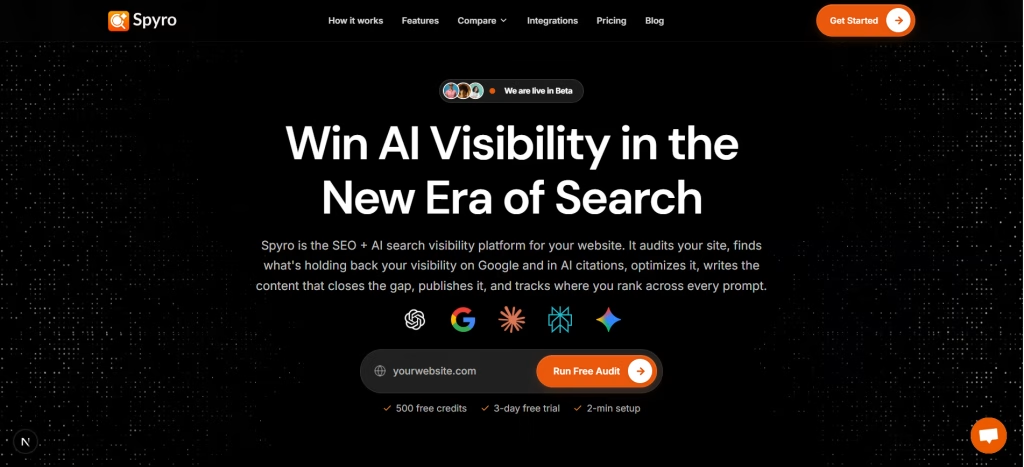
What it is. Spyro AI is an SEO and AI search visibility platform. It tracks mentions and citations in ChatGPT, Claude, Gemini, Perplexity and Google AI Overviews, and adds keyword rank tracking, site audits, competitor gap analysis and an article writer that publishes to WordPress, Shopify, Notion or webhooks.
Engines. Starter covers ChatGPT and Google AI Overviews. Pro and Agency cover all five. There’s no Copilot, Google AI Mode or Grok.
Pricing. Starter is $29, Pro is $99 and Agency is $399. Starter includes 4,000 credits, up to 2 brands and 15 prompts per brand. Pro has 15,000 credits, up to 10 brands and 50 prompts per brand. Agency has an 80,000 credit pool, unlimited brands and 250 prompts per brand. A 3 day trial comes with 500 free credits. The pricing page offers a 20% yearly saving, but the FAQ lists $990 a year for Pro and $3,990 for Agency, which doesn’t match, so confirm at checkout.
Reporting. Prompt checks run daily or weekly, your choice. You get mentions per engine, citation checks, up to five competitor domains for gap analysis and unlimited team members on every plan.
Strengths. Tracking, rankings, audits and content live in one login at a low entry price. That suits teams who want to fix gaps, not just see them.
Limitations. One shared credit pool, and the pricing page charges 10 credits per prompt per engine. By my arithmetic, 50 prompts on five engines is 2,500 credits for a single full run, so ask how checks are metered before you plan around it. Exports and white label reports aren’t documented on the pricing page, and Starter’s two engines won’t cover teams that need Claude, Gemini or Perplexity.
Best fit. Among the best AI visibility tools, Spyro AI suits small and mid sized teams and agencies that want tracking and publishing together. See the Spyro AI pricing page, or the comparison with Rankability.
2. Otterly.AI
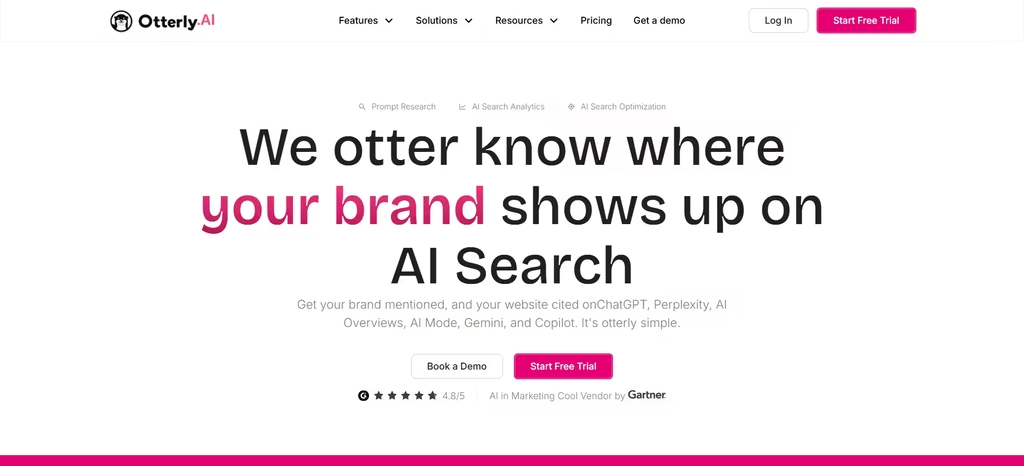
What it is. A self serve monitoring tool built around daily checks and link citation analysis.
Engines. ChatGPT, Google AI Overviews, Perplexity and Microsoft Copilot on every plan. Gemini and Google AI Mode are paid add ons from $9 a month (Lite) up to $149 (Premium), and Claude runs from $29 to $439.
Pricing. Lite is $29, Standard is $189 and Premium is $489, with prompts at 15, 100 and 400. The page shows $25, $160 and $422 beside an annual 15% off toggle. Extra prompts are $99 per 100 on Standard and Premium.
Reporting. Reports and exports on every plan. Looker Studio, API and MCP access start on Standard. Lite is one workspace, Standard and up are unlimited, with unlimited team members throughout.
Strengths. Daily data on four engines at the lowest entry price in this guide.
Limitations. The jump from $29 to $189 is steep, and Claude is an add on.
Best fit. Of the best AI visibility tools for light budgets, Otterly.AI suits small teams that want daily tracking on the main engines without a big commitment. Agencies can apply to a partner program from Standard up.
3. Peec AI
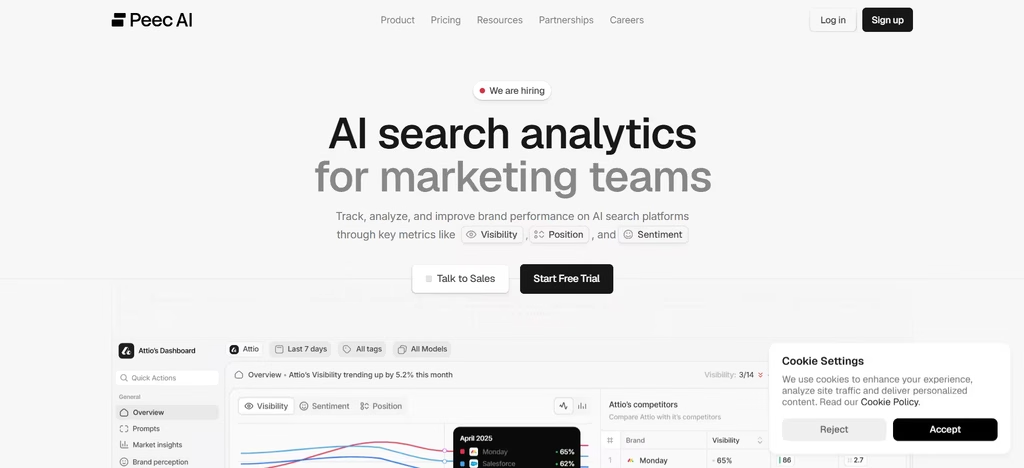
What it is. An analytics focused AI search platform with separate brand and agency plans.
Engines. Each brand plan runs 3 active models you choose. Add on models listed include ChatGPT, AI Mode, AI Overviews, Copilot, Perplexity and Gemini. Claude appears on higher agency coverage.
Pricing. Starter $95, Pro $245, Advanced $495, with 50, 150 and 350 prompts, tracked daily. Enterprise is custom. Annual billing saves 15%. Agency plan prices aren’t published.
Reporting. Unlimited users and competitors on every plan, CSV exports and MCP on all plans. API and Looker Studio start on Advanced. Source usage at domain and URL level is the standout.
Strengths. Deep source analytics and no seat or competitor caps.
Limitations. Only 3 models per plan, and no public agency prices.
Best fit. SEO and content teams who care most about which sources AI cites. The Spyro AI vs Peec AI comparison covers the differences.
4. Profound
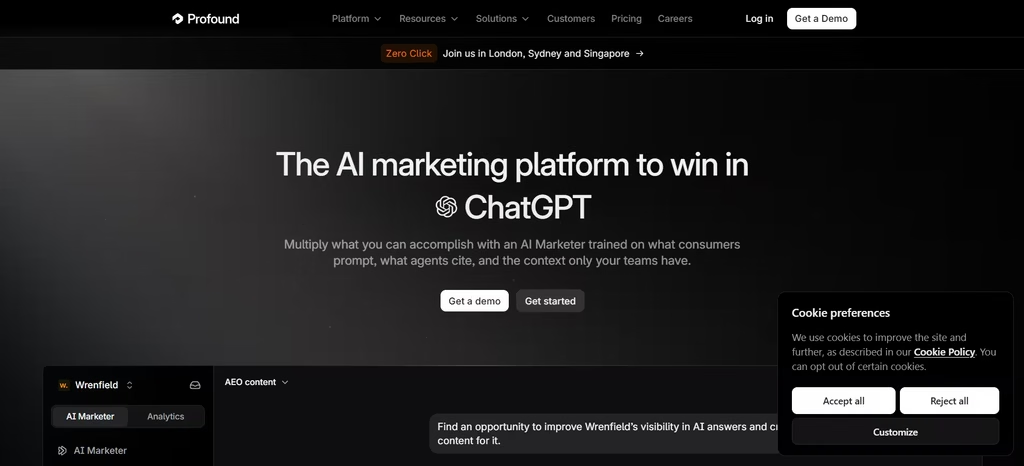
What it is. The enterprise option here, with a sales led process.
Engines. The free trial covers ChatGPT, Gemini and Google AI Overviews. Enterprise covers up to 9, including Perplexity, AI Mode, Copilot, DeepSeek and Claude.
Pricing. A free 7 day trial with 50 unique prompts, then custom pricing. A self serve Agency Growth plan gives 400 credits a month per client workspace, with no published dollar price.
Reporting. Enterprise lists CSV and JSON exports, API access, all time data history, SSO/SAML and SOC 2. The trial has no history, export or API.
Strengths. Security and compliance features that procurement teams ask for.
Limitations. No public price, so SMBs can’t budget before a sales call.
Best fit. Large brands and agencies serving them. See the Spyro AI vs Profound comparison.
5. AIClicks
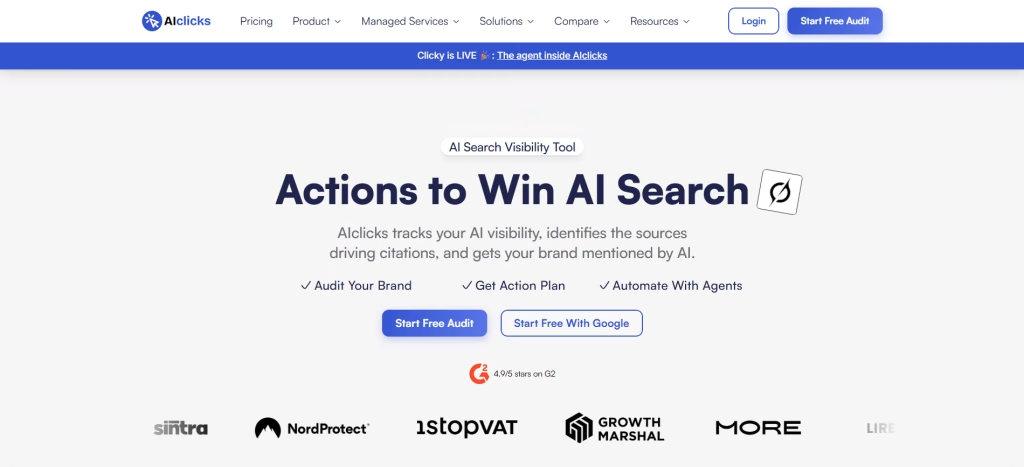
What it is. AI visibility tracking paired with a monthly allowance of AI written articles.
Engines. 3 models on Starter, 4 on Pro and 6 on Business, chosen from a longer list.
Pricing. Starter $59, Pro $189, Business $499, with 30, 150 and 300 prompts and 5, 15 and 30 articles a month. Yearly billing is up to 29% off. Each plan has a 3 day trial that needs a card. Agency pricing is custom.
Reporting. GA4, API and MCP from Pro. Starter covers 1 website, while Pro and Business allow unlimited websites.
Strengths. Articles included, and prompts can be split across projects.
Limitations. Engine choice is capped by plan, so “10+ engines” doesn’t mean 10 on Starter.
Best fit. Teams that want tracking and articles from one vendor and can live with a model cap.
6. Semrush AI Visibility Toolkit
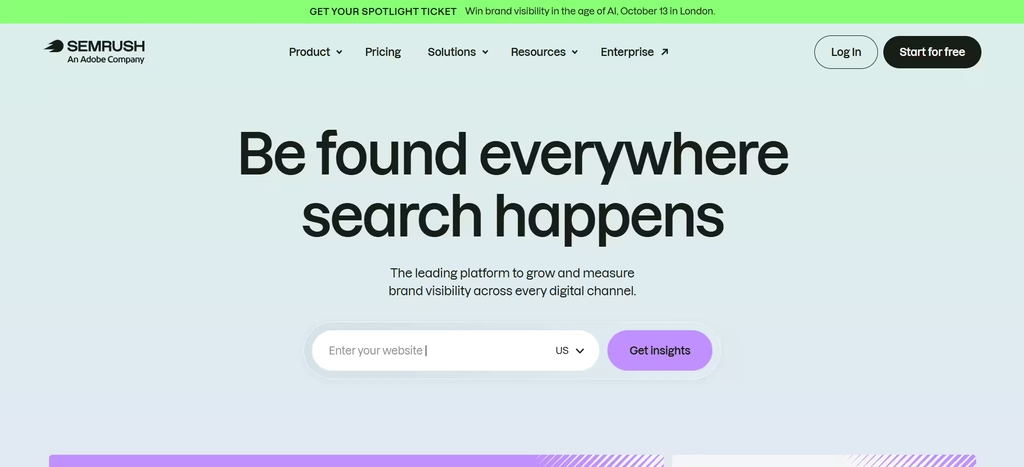
What it is. AI search reports added to the Semrush SEO suite.
Engines. The documentation names ChatGPT and Google AI Mode. Confirm other engines with Semrush before you buy.
Pricing. $99 a month for one domain, plus $99 per extra domain or location and $99 per extra user. 25 prompts, and 50 more cost $60 a month. The toolkit has no free trial. Combined SEO plus AI search plans start at $139 a month ($117.33 billed annually).
Reporting. Prompt Tracking, Brand Performance (share of voice, sentiment) and an AI search site audit. CSV exports are capped at 1,000 rows and 10 a day per user.
Strengths. It sits beside the keyword and backlink data your team already uses.
Limitations. Per domain and per user pricing climbs quickly with several brands.
Best fit. For Semrush teams with one or two domains, it’s the easiest of the best AI visibility tools to adopt. The Semrush AI Toolkit alternatives guide covers cheaper routes.
7. Ahrefs Brand Radar
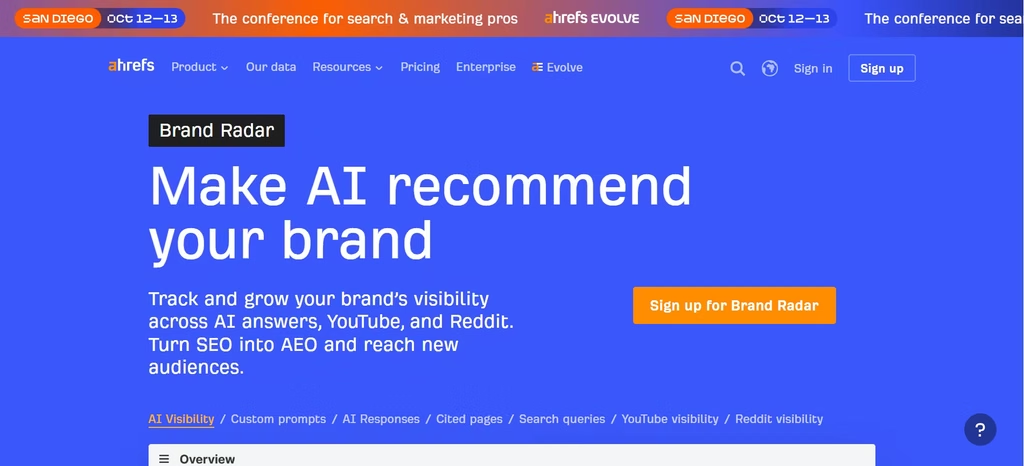
What it is. An add on inside Ahrefs with two parts: Custom Prompts for questions you choose, and an AI Visibility Index that benchmarks brands across a large prompt database.
Engines. ChatGPT, Perplexity, Gemini, Copilot, AI Overviews and AI Mode, plus Claude on Custom Prompts.
Pricing. Custom Prompts start at $50 a month and the AI Visibility Index is $199. Paid Ahrefs plans include 5, 10 or 20 prompts. The page’s own figures differ in places, so check the current tier before buying.
Reporting. Mentions, citations, AI share of voice and estimated impressions, updated daily, weekly or monthly.
Strengths. Market wide benchmarks are handy when you pitch a prospect.
Limitations. Checks run out faster with every extra engine and update, and agency features aren’t described on the page.
Best fit. Teams already working in Ahrefs. The Spyro AI vs Ahrefs comparison covers the feature side.
8. Scrunch
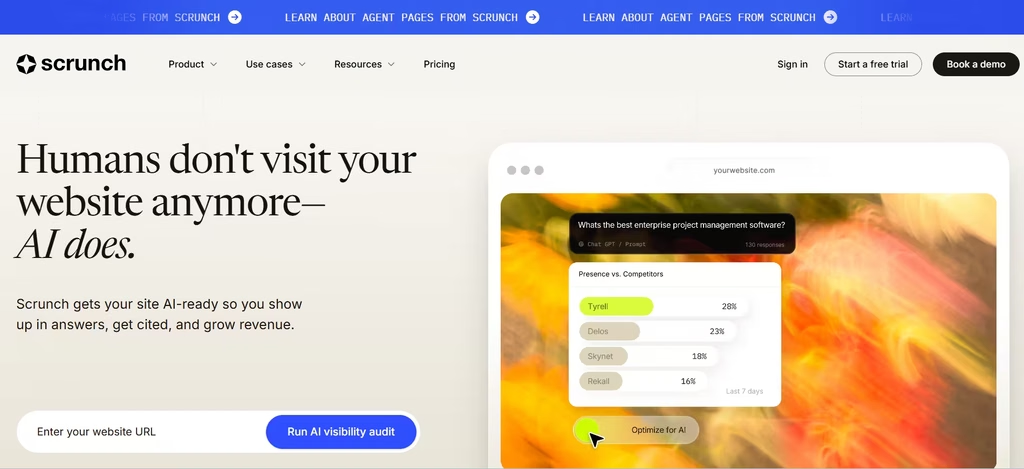
What it is. A prompt heavy platform with persona level reporting and page audits for AI agents.
Engines. ChatGPT, Claude, Gemini, Perplexity, Google AI Mode, AI Overviews and Meta.
Pricing. Starter is $250 a month billed annually or $300 month to month, with 350 custom prompts, 3 personas and 3 user licenses. Growth is $417 annually or $500 monthly, with 700 prompts and 5 licenses. Extra seats are $25 a month. There’s a 7 day trial with no card.
Reporting. A performance trends dashboard on every plan. The Data API is Enterprise only.
Strengths. The widest engine list here and a big prompt allowance.
Limitations. The highest self serve entry price in this guide.
Best fit. Larger teams that segment by audience persona.
9. Rankability
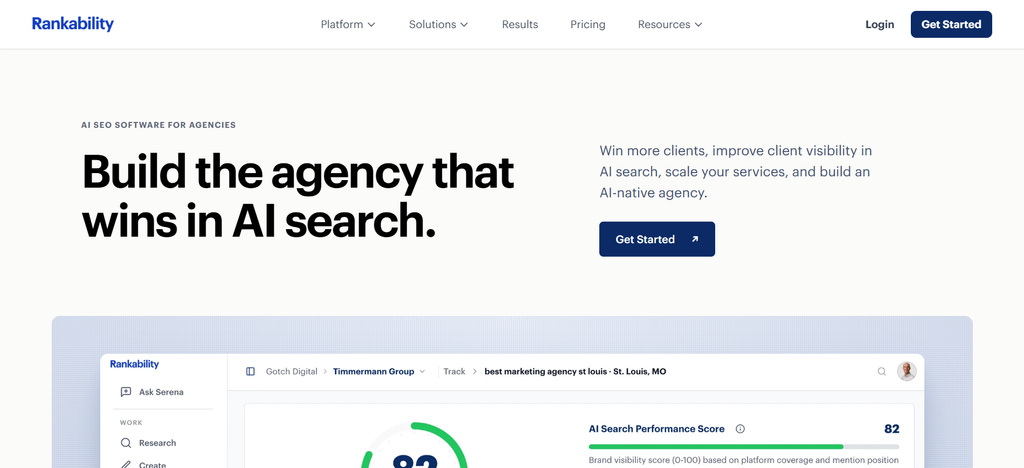
What it is. AI SEO software aimed at agencies, with content projects, audits and AI tracking.
Engines. 11 AI platforms on every plan.
Pricing. Starter $97, Agency $297, Agency Pro $497 a month, or $970, $2,970 and $4,970 a year. Tracked AI queries are 100, 300 and 500. The trial is 7 days and needs a card.
Reporting. Unlimited client workspaces, agency branded reports, API and MCP on every plan.
Strengths. Branded client reports at a published price.
Limitations. Query allowances are shared, so 300 queries across 15 clients is 20 each.
Best fit. Among the best AI visibility tools for agencies, Rankability fits teams that put reports straight in front of clients.
Which of the Best AI Visibility Tools Fits Your Team?
There’s no universal answer among the best AI visibility tools, so match the tool to the job. These picks rest on the features and prices above.
- Small business on a tight budget: Spyro AI Starter or Otterly.AI Lite. Pick the one whose engines match where your customers ask questions.
- SMB building an AI search plan: Spyro AI Pro, Peec AI Starter or AIClicks Starter. Fifty prompts or so is a workable first set.
- In house SEO and content team: Peec AI or Ahrefs Brand Radar for source analysis, Spyro AI or AIClicks if you want content help too.
- Marketing team with several brands: Spyro AI Pro (up to 10 brands) or Otterly.AI Standard (unlimited workspaces).
- Agencies: Spyro AI Agency or Rankability. The AI visibility tools for agencies comparison shows the math at 10, 20 and 40 clients.
- Enterprise with advanced reporting: Profound for compliance, Scrunch for persona data.
- Competitor visibility focus: Peec AI, Ahrefs Brand Radar and Semrush all lead with it. Spyro AI adds competitor gap analysis for up to five domains.
- Citation and source discovery: Peec AI, Otterly.AI and Ahrefs.
Would a cheaper tool do? Often, yes. If you only need weekly checks on a handful of prompts, a $29 plan is plenty. Pay more when you need more engines, more brands or exports you can hand to a client.
How Do You Choose Between the Best AI Visibility Tools?
Write your answers to these before you open a single pricing page.
- Which engines matter? Ask your customers or sales team where they search. Don’t pay for six engines when two are enough.
- How many brands, domains or clients? This sets your plan tier faster than anything else.
- How many prompts? Start with 20 to 30 real buyer questions per brand.
- How often should checks run? Weekly suits most reports. Daily helps during launches.
- Do you need history? Some trials keep none.
- What reporting do you need? CSV, PDF, Looker Studio, API or branded reports.
- Who needs access? Seat fees add up at some vendors and don’t exist at others.
- What will you do with the data? If the answer is “fix pages and publish,” content features matter.
- What’s the total cost? Add engine add ons, extra prompts, seats and domains.
A tool with more features isn’t automatically better. I’d run two shortlisted tools on the same ten prompts for a week and compare the reports you’d actually share.
How Are the Best AI Visibility Tools Different From Traditional SEO Tools?
Traditional SEO tools track rankings, keywords, backlinks and technical health on search results pages. The best AI visibility tools track mentions and citations inside generated answers, one prompt at a time.
A few differences matter in practice. A ranking is a position on a list, while a mention can sit in the middle of a paragraph. Keyword research starts from search volume, and prompt tracking starts from the questions buyers ask an assistant. And a technical audit tells you whether crawlers can reach your pages, which a tracker can’t.
Keep both. Rankings still drive clicks, and Search Console still reports your Google traffic. AI visibility tracking adds the view of what assistants say about you. The free AI visibility checker gives a quick baseline if you want to see that view before you pay for anything.
What Mistakes Should You Avoid When Buying the Best AI Visibility Tools?
- Buying on price alone. A cheap plan with two engines may miss the one your buyers use. Compare engines and prompts first.
- Assuming every tool covers the same engines. They don’t. Check the plan, not the homepage.
- Confusing AI text detectors with visibility trackers. A detector guesses whether text was machine written. A tracker checks whether assistants name your brand.
- Tracking too few prompts. Ten prompts is a thin sample. Aim for a set that reflects real buying questions.
- Ignoring trends. Judge the line over weeks, not one answer.
- Trusting a single answer. Answers change between runs, so look at frequency across many prompts.
- Comparing sticker prices without limits. Prompts, seats, domains and exports change the real cost.
- Expecting leads from a score. Visibility metrics don’t guarantee citations, leads or revenue.
- Skipping SEO basics. Pages that are slow, thin or blocked won’t get cited just because you’re tracking them.
Key Takeaways
- The best AI visibility tools measure mentions, citations, competitors and trends across the AI engines your buyers use.
- Choosing the best AI visibility tools for your team starts with engines, prompts and check frequency, not the entry price.
- Engines, prompts and check frequency matter more than the entry price.
- Spyro AI, Otterly.AI, Peec AI, Profound, AIClicks, Semrush, Ahrefs Brand Radar, Scrunch and Rankability each win for a different job, and none wins for all.
- Agencies should price by client count, and SMBs should start with a small prompt set and two engines.
- Tracking shows the gap. Content, technical fixes and consistent publishing are what close it.
Frequently Asked Questions
What are the best AI visibility tools in 2026?
The best AI visibility tools in 2026 include Spyro AI, Otterly.AI, Peec AI, Profound, AIClicks, the Semrush AI Visibility Toolkit, Ahrefs Brand Radar, Scrunch and Rankability. The right choice depends on your budget, the engines you need, how many brands you track and the reports you hand to others.
What do the best AI visibility tools measure?
They measure brand mentions, citations to your pages, competitor visibility, share of voice and how those numbers change over time, based on a set of prompts you choose.
Can the best AI visibility tools track ChatGPT and Google AI Overviews?
Yes. Spyro AI, Otterly.AI, Scrunch and Ahrefs Brand Radar cover both, and Profound’s trial does too. Peec AI and AIClicks let you pick which models to run, so choose both on purpose. Semrush’s documentation names ChatGPT and Google AI Mode, so confirm AI Overviews coverage with Semrush.
Are the best AI visibility tools worth it for small businesses?
They can be, if you track a small, focused prompt set and act on what you find. Entry plans start at $29 a month. If your buyers rarely use AI assistants to research purchases, a free baseline report may be enough for now.
How much do the best AI visibility tools cost?
Published entry prices run from $29 a month (Spyro AI Starter, Otterly.AI Lite) to $250 a month billed annually (Scrunch Starter). Agency and team plans run from about $99 to $500 a month, and Profound is custom. Engine add ons, seats and extra prompts raise the total.
What is the difference between AI visibility tracking and traditional SEO?
AI visibility tracking records whether assistants mention or cite your brand in generated answers. Traditional SEO tracks rankings, backlinks and technical health in search results. You’ll want both.
Are there free AI visibility tools?
For ongoing tracking, I didn’t find a permanent free plan among the nine tools here. Most offer a free trial (3 to 7 days). Spyro AI also runs a free AI visibility checker that tests 5 prompts on ChatGPT and Google AI Overviews and needs no card.
Pick From the Best AI Visibility Tools, Then Test It on Your Own Prompts
Write down your engines, brands and budget. Shortlist two of the best AI visibility tools, run the same ten prompts through both and compare. If you want a baseline first, run the free AI visibility checker or look at the Spyro AI pricing page.